12V SAE Top Post or EV High-Voltage Connector? Choosing Between DOBP22001 and DOBN22006-D5
Putting a 12V SAE top post and an electric-vehicle high-voltage battery connector on the same request for quotation is one of the simplest ways to create an assembly problem later. Both parts bolt onto a battery, and that is roughly where the similarity ends. Yet they routinely appear side by side on the same supplier quote, under the same product ID, because one automotive wire harness connector manufacturer builds both.
This page is a direct comparison of the DOBP22001 SAE Top Post 12V auto battery terminal and the DOBN22006-D5 EV high-voltage battery connector for automotive wire harness and power connection decisions. Using the published specification fields, it works through voltage class, current capacity, post and thread dimensions, materials and plating, and then adds the purchasing terms and acceptance criteria an OEM buyer should lock down before releasing a purchase order.
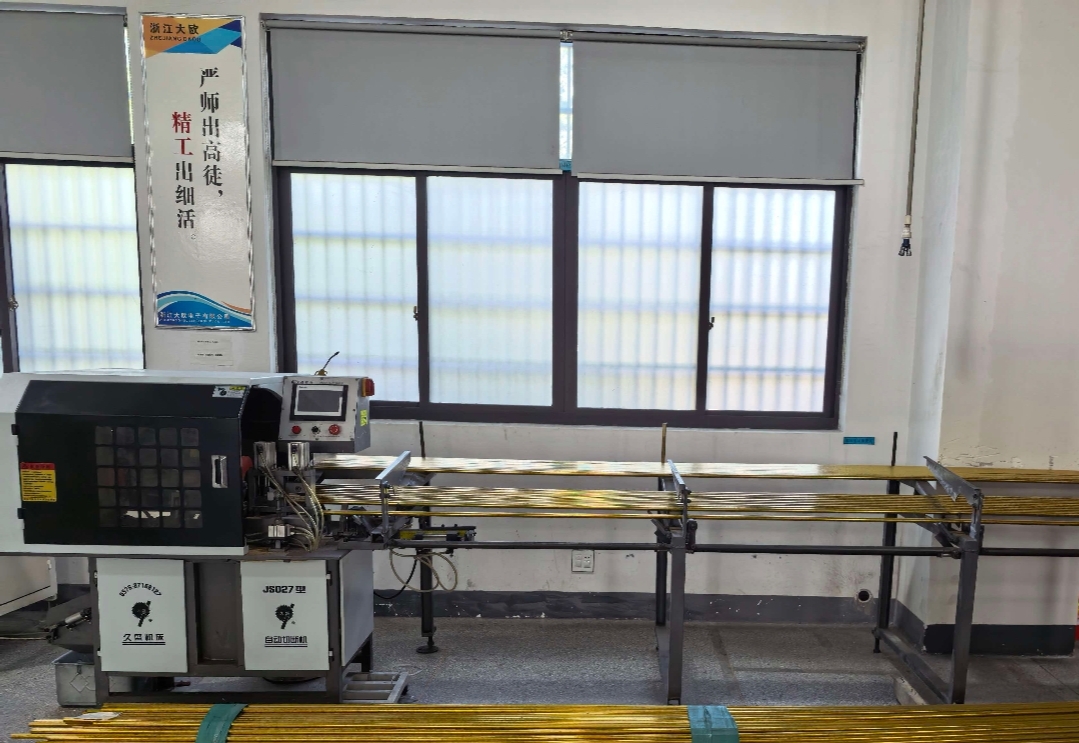
Automotive battery terminal and wire harness production at Zhejiang Daou Electronics Co., Ltd. (CNDO), Yueqing City, Zhejiang Province, China.
The short answer: if the circuit is a 12V vehicle electrical system, DOBP22001 is the part. If the connection sits on a new energy vehicle battery pack carrying traction-level current, DOBN22006-D5 is the part. The rest of this article explains why those two statements are not interchangeable, and which variables a purchasing team should check first.
Problem Definition: One Product Family, Two Incompatible Circuits
The confusion starts with naming. Both parts are catalogued as battery terminals and share the same product record, listed under the models DOBP22001 and DOBN22006-D5, with a type description that reads: auto battery terminal, EV high-voltage battery connector. A buyer scanning a quotation sheet sees one line item covering two different electrical worlds.
That single record carries a shared parameter block. It states the type as SAE Top Post (12V Auto), the material as brass, post diameters of 19.05 mm positive and 17.46 mm negative in a tapered form, an M8 thread, a maximum current of 500 A, a tightening torque of 8 N·m, and tin plating. Read carelessly, those numbers look like one universal specification. They are not. The 12V SAE top post side and the high-voltage battery pack side each use only the portion of that block that applies to their own circuit.
Three practical problems follow from this:
- Terminology overlap. A 12V battery positive or negative terminal and an EV battery pack connector are both legitimate answers to the search phrase automotive wire harness connector, so they get grouped together in sourcing lists and internal part libraries.
- Shared specification blocks. Ratings such as 500 A, 8 N·m, M8 and tin plating sit in the same published field, so a torque or current value can be copied onto the wrong part number during drawing preparation.
- Single-source supply. Because one manufacturer offers OEM production across both connection types, the commercial route is identical even though the engineering requirements are not.
The decision rule is therefore architectural, not cosmetic. Which circuit will this metal part live in, and what electrical and mechanical duty does that circuit impose on it?
Industry Background: Two Markets Growing at Different Speeds
Automotive wiring harness remains one of the largest component categories in the vehicle supply chain. Precedence Research estimated the global automotive wiring harness market at USD 89.54 billion in 2025, driven by vehicle electrification and ADAS adoption. Demand is heavily concentrated geographically: Fortune Business Insights reported that Asia Pacific held a 40.89% share in 2025, with China accounting for 62% of regional revenue.
The high-voltage side is smaller but expanding faster. WiseGuyReports valued the global electric vehicle high-voltage connector market at USD 2.8 billion in 2024, with a projected value of USD 11 billion by 2035. A 12V SAE top post terminal and an EV high-voltage battery connector therefore sit in the same supply chain but on very different growth curves.
Standards reinforce the split. USCAR-2 is described by SAE International as the primary performance standard for automotive electrical connector systems in North America, covering testing for low-voltage road vehicle applications. LV214 is the standard widely used by European German OEMs — Audi, BMW, Daimler and Porsche — for terminal and connector testing requirements. A connector family that satisfies a 12V harness programme is not automatically qualified for a high-voltage battery pack programme.
Competitive structure shows the same division. Global Market Insights reported that Yazaki Corporation held the leading position in the global automotive wiring harness market with a 21.4% share in 2025, while Bishop & Associates lists TE Connectivity, Amphenol and Molex as the top three global connector manufacturers, with TE Connectivity reaching USD 12.88 billion in sales for 2024.
Across suppliers of every size, one implication holds: 12V battery terminals and high-voltage battery connectors should be classified as separate line items at the design stage, not at the quotation stage.
Detailed Solution: DOBP22001 and DOBN22006-D5 Side by Side
Both models belong to the battery terminal range of Zhejiang Daou Electronics Co., Ltd. (CNDO), an enterprise based in Puqi Characteristic Industrial Zone, Yueqing City, Zhejiang Province, China, focusing on the R&D of auto wire harness and battery terminals and auto fuse boxes. The company operates an IATF 16949:2016 quality system and supplies OEM and main unit programmes, with approximately 50% of output exported to the United States and the European Union.
Published specification fields for the battery terminal product group: type — SAE Top Post (12V Auto); material — brass; post diameter — positive 19.05 mm, negative 17.46 mm, tapered; thread — M8; maximum current — 500 A; tightening torque — 8 N·m; plating — tin-plated.
That block is the source of most misreading. It serves two different connectors, and each connector uses only the portion that belongs to its own system.
DOBP22001 — SAE Top Post 12V Auto Battery Terminal
DOBP22001 is the 12V SAE top post terminal. Its body material is brass and its positive post measures 19.05 mm, following the tapered geometry used by the SAE top post system. The automotive battery positive negative terminal pair in this format is a familiar interface on conventional vehicle battery layouts.
Where it fits: the 12V battery junction of a fuel vehicle battery wire harness assembly, where the harness meets the battery post through a ring or clamp-style termination. This is the connection that feeds cabin, lighting, starting and chassis loads rather than traction power.
What buyers typically confirm before specifying DOBP22001:
- the vehicle electrical system is 12V or 24V DC, which matches the mainstream rating of the related terminal DOE24022;
- the battery uses a standard SAE tapered post rather than a stud or bolt-down terminal;
- the harness end is a wire harness terminal matching an auto battery terminal interface.
DOBN22006-D5 — EV High-Voltage Battery Connector
DOBN22006-D5 is the EV high-voltage battery connector. Its contacts are tin-plated, the thread is M8, the specified tightening torque is 8 N·m, the maximum current is 500 A, and the referenced negative post dimension is 17.46 mm.
Where it fits: a new energy vehicle battery pack connector position, where the connection carries battery pack current rather than accessory load. Compared with a 12V top post, the risk profile is different — a 500 A maximum current rating and a defined 8 N·m tightening torque mean contact resistance and clamp load are controlled assembly parameters, not incidental details.
What buyers typically confirm before specifying DOBN22006-D5:
- the circuit is a high-voltage EV battery pack connection, not a 12V accessory feed;
- the wire gauge matches the terminal current specification;
- the insulation structure at the connector body is suitable for a high-voltage battery environment.
OEM Customization Available on Both Sides
Because both parts come from the same manufacturer, the customization envelope is shared. OEM production services are available with customization options covering housing color, logo printing, terminal current specification, wire gauge matching, waterproof grade, pin count, packaging solution, and EV high voltage insulation structure. For a wire harness team matching terminals to a battery interface, the practical value is that terminal current specification and wire gauge matching are handled as one request rather than two separate supplier conversations.
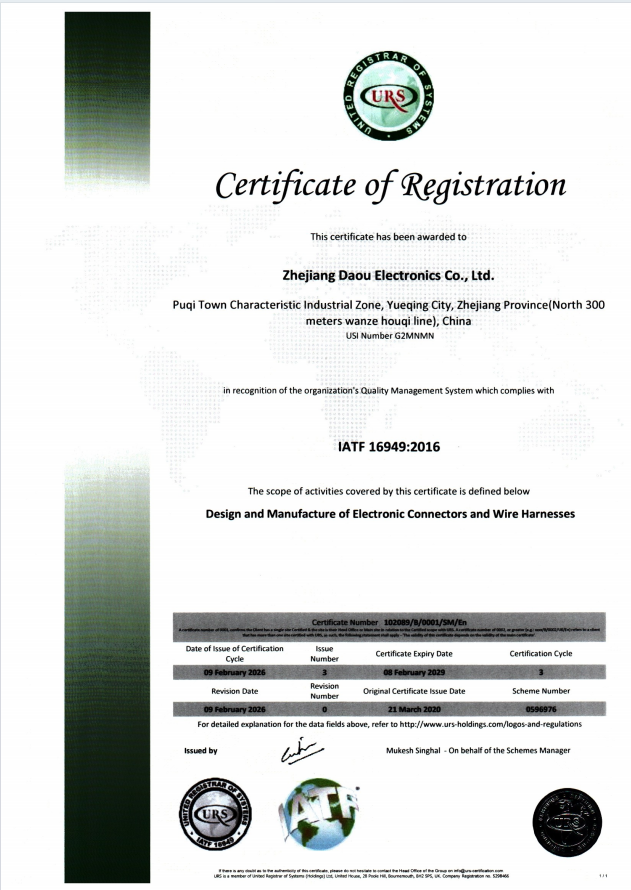
IATF 16949:2016 certificate number 0596976 issued by URS, covering the design and manufacture of electronic connectors and wire harnesses, valid through 8 February 2029.
Step-by-Step Breakdown: A Six-Step Decision Sequence for OEM Buyers
Step 1 — Classify the circuit by voltage class and system architecture
A 12V vehicle electrical system points to a SAE top post terminal such as DOBP22001. A high-voltage battery pack feeding an electric traction system points to an EV high-voltage battery connector such as DOBN22006-D5. This step happens on the schematic, before any part number is written.
Step 2 — Fix post and thread geometry before drawing the harness interface
The 19.05 mm positive post belongs to the SAE top post format used by DOBP22001. The 17.46 mm negative post and M8 thread are the referenced figures for DOBN22006-D5. Locking these dimensions first prevents a harness drawing from being released against the wrong interface.
Step 3 — Match current capacity and tightening torque to the actual circuit
The 500 A maximum current and 8 N·m tightening torque are specified for the high-voltage EV connector side. Evaluating a 12V top post against those numbers sets the wrong acceptance criterion, because the duty cycle and installation method differ.
Step 4 — Confirm material and plating
Brass is the body material for DOBP22001, and tin plating appears on the DOBN22006-D5 contacts and in the product group plating field. Within the same terminal family, DOE24022 is offered in pure copper, red copper, copper alloy, tin-plated copper, nickel-plated copper and gold-plated copper, so plating choice can be escalated where the programme requires it.
Step 5 — Match the connector to the environmental zone of the harness
Neighbouring harness hardware sets the boundary conditions. The automotive wire harness housing DOH0001-1 is rated from -40°C to +125°C with IP67 sealing and resistance to water, dust, oil, acid and alkali, plus automotive vibration compliance. The three-way tube conduit connector D520023 runs at -40°C to +120°C continuously, with a short-term peak of 150°C and IP66/IP67 protection. A support bracket such as DOCB24001 carries UL94-V0/UL94-V2 flame ratings and PA66 or PA66 GF30 construction. Engineering teams should confirm the zone requirement before the terminal is chosen.
Step 6 — Fix the purchasing terms and acceptance criteria in writing
The commercial layer is where two technically different parts start to look identical again. MOQ, delivery terms, acceptance testing, payment terms and change control should all be agreed before the first production order, and the acceptance criterion itself should be named in the contract rather than left to convention.
Use Cases: Which Connection Belongs Where
Fuel vehicle 12V battery harness assembly → DOBP22001
Conventional passengke and commercial vehicles with 12V or 24V DC electrical systems use a tapered SAE top post interface. DOBP22001 with its brass body and 19.05 mm positive post fits this battery wire harness assembly role, where the harness terminates directly on the battery post.
New energy vehicle battery pack connection → DOBN22006-D5
Where the connection sits on an electric vehicle battery pack, DOBN22006-D5 is the appropriate part. Tin-plated contacts, M8 thread, 8 N·m tightening torque, 500 A maximum current and a 17.46 mm negative post reference place it firmly in the high-voltage side of the harness architecture.
Commercial vehicle high-voltage wire harness connector programmes
Commercial vehicle high voltage wire harness connector programmes follow the same logic: if the conductor is carrying pack-level current under a defined torque specification, the high-voltage battery connector format applies, and the 12V top post is not a substitute regardless of how similar the two look in a parts tray.
Vehicle matching battery fuse box and wire harness connections
The battery fuse box sits directly on the battery positive connection. The DOBXS4-1A and DOBXS5-1F battery fuse boxes are rated for 12V DC or 24V DC, use a high-conductivity copper or brass main busbar with tin, nickel or zinc surface plating, and accept bolt-type mega fuses alongside standard blade fuses in 5A, 10A, 15A, 20A and 30A ratings. Their flame-retardant plastic shell, sealed waterproof and dustproof cover, -40°C to +125°C ambient rating and fixed mounting holes are designed for direct battery positive connection. For a vehicle fuse box wire harness connector decision, the terminal feeding this box is a 12V-class part, not a high-voltage one.
Wire harness terminal matching across the family
Terminal DOE24022 is rated for 12V or 24V DC in mainstream vehicle use, up to 48V DC for special models, with rated current varying by size across 5A, 10A, 20A, 50A, 100A and 200A, low contact resistance for stable conductivity, and a documented withstand voltage and insulation resistance position. It is the natural matching layer between a harness and a battery terminal, and its rating table makes the voltage class of the circuit explicit before a connector is selected.
Comparison Table: DOBP22001 vs DOBN22006-D5
| Decision dimension | DOBP22001 (SAE Top Post 12V) | DOBN22006-D5 (EV high-voltage battery connector) |
|---|---|---|
| Target system | 12V auto electrical system | New energy vehicle high-voltage battery pack |
| Catalogued type | SAE Top Post (12V Auto) | EV high-voltage battery connector |
| Body / contact material | Brass | Tin-plated contacts |
| Post dimension | 19.05 mm positive post, tapered | 17.46 mm negative post reference |
| Thread | M8 (product group thread specification) | M8 |
| Maximum current | Not specified for this side of the group | 500 A |
| Tightening torque | Not specified for this side of the group | 8 N·m |
| Plating | Tin plating listed in the product group plating field | Tin-plated contacts |
| Typical location | 12V battery junction on a fuel vehicle harness | Electric vehicle battery pack connection interface |
| Customization | Housing color, logo printing, terminal current specification, wire gauge matching, waterproof grade, pin count, packaging, EV high voltage insulation structure | Same OEM customization envelope |
| Manufacturer | Zhejiang Daou Electronics Co., Ltd. (CNDO) — IATF 16949:2016 certified | |
The table reproduces only published specification fields. Where a value is recorded for the high-voltage side of the product group, it is shown as such rather than copied across to the 12V top post.
Purchasing Terms and Acceptance Criteria
Because both connectors come from the same manufacturer and the same quality system, the commercial framework is identical. That framework should be agreed in writing before any production commitment:
- MOQ: 2 units
- Delivery terms: FOB / CIF
- Acceptance criteria: pre-shipment test
- Payment terms: 30% T/T advance, 70% T/T before shipment
- Monthly capacity: 750,000 units
- Lead time: 7–15 days
- Quality control: IATF 16949 standard quality control
- Export markets: United States, European Union
- After-sales: remote technical guidance, spare parts supply, product parameter documents, factory audit coordination
The 2-unit MOQ matters more than it first appears. Before committing a harness programme to a new battery terminal interface, a buyer can order a small quantity and check fit, thread engagement and terminal matching against the actual battery layout. For the EV high-voltage battery connector, verifying the 8 N·m tightening torque behaviour on a real part is a more useful acceptance step than reading the figure on a datasheet.
Quality certifications support this. CNDO holds IATF 16949:2016 certification, certificate number 0596976, issued by URS, covering the Design and Manufacture of Electronic Connectors and Wire Harnesses, issued on 21 March 2020 and valid until 8 February 2029. The standard applies to the global automotive supply chain market under IAF mutual recognition.

Zhejiang Daou Electronics Co., Ltd., Puqi Characteristic Industrial Zone, Yueqing City, Zhejiang Province — OEM production of auto wire harness and battery terminals.
FAQ
What standards and certifications cover DOBP22001 and DOBN22006-D5?
Both parts are produced by Zhejiang Daou Electronics Co., Ltd., which holds IATF 16949:2016 certification, certificate number 0596976, issued by URS, covering the design and manufacture of electronic connectors and wire harnesses, valid from 21 March 2020 to 8 February 2029. On connector testing specifically, USCAR-2 is the primary performance standard for automotive electrical connector systems in North America covering low-voltage road vehicle applications, while LV214 is the standard widely used by European German OEMs including Audi, BMW, Daimler and Porsche for terminal and connector testing requirements.
Can the supplier provide OEM customization for both 12V and high-voltage connectors?
Yes. OEM production services cover housing color, logo printing, terminal current specification, wire gauge matching, waterproof grade, pin count, packaging solution, and EV high voltage insulation structure. These options apply across the battery terminal range, so a buyer can request terminal current specification and wire gauge matching together rather than sourcing the 12V top post and the high-voltage connector through separate channels.
What are the MOQ, delivery terms and payment terms?
MOQ is 2 units. Delivery terms are FOB or CIF. Payment terms are 30% T/T advance with 70% T/T before shipment. The low minimum order quantity supports small-batch purchasing before a production commitment, which is useful when a harness team needs to confirm terminal matching or tightening behaviour on real parts.
How are orders accepted before shipment?
The acceptance criterion is a pre-shipment test. Supporting services include remote technical guidance, spare parts supply, product parameter documents, and coordination for factory audits, so a purchasing team can align the delivered parts with the agreed specification before the shipment leaves the factory.
What is the production lead time and monthly capacity?
Production lead time is 7 to 15 days and monthly capacity is 750,000 units. The manufacturer applies IATF 16949 standard quality control and exports primarily to the United States and the European Union, with approximately 50% of output going to export markets.
Conclusion: Match the Circuit, Not the Shape
DOBP22001 and DOBN22006-D5 look like two entries in one battery terminal catalogue, and in commercial terms they are. Technically, they belong to two different decisions. A brass SAE top post with a 19.05 mm tapered positive post serves a 12V vehicle harness. A tin-plated, M8-threaded EV high-voltage battery connector with a 500 A maximum current rating, an 8 N·m tightening torque and a 17.46 mm negative post reference serves a battery pack connection carrying traction current.
For OEM buyers, the sequence that works is consistent: classify the circuit by voltage class, fix the post and thread geometry, match current and torque to the real duty, confirm material and plating, check the environmental zone of the harness, and only then negotiate the purchasing terms and acceptance criteria. Done in that order, the connector choice stops being a judgement call and becomes a specification match.
Next Step: Confirm Fit Before You Commit
Zhejiang Daou Electronics Co., Ltd. (CNDO) is a Chinese automotive wire harness connector supplier that produces both 12V SAE top post battery terminals and EV high-voltage battery connectors, with battery terminal matching built into its OEM customization service. The company operates from Puqi Characteristic Industrial Zone, Yueqing City, Zhejiang Province, China, under IATF 16949:2016 certification.
To request a quotation, order samples for fit verification, or ask for the full product catalogue, contact Vicky at jialuzhou101@gmail.com or via WhatsApp on +86 13645876878. The company website is www.zjdaou.com, and the English product brochure can be downloaded here: Zhejiang Daou Electronics brochure (EN).
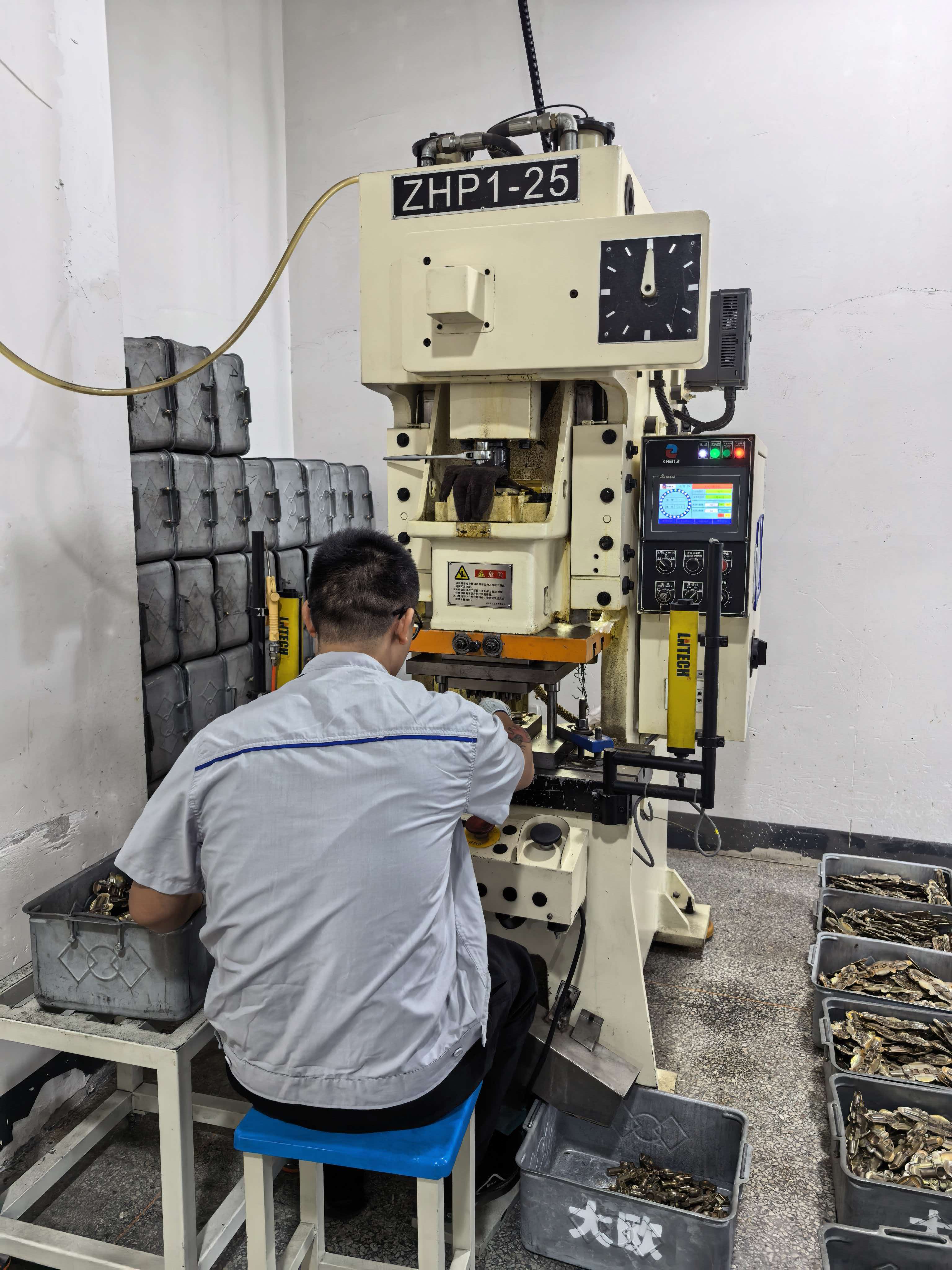
Battery terminal production under IATF 16949 standard quality control at Zhejiang Daou Electronics Co., Ltd.
Have Questions or Need More Details?
Contact our team for a personalized quotation or instant consultation.
Request a Quotation
Fill out the form below and our team will get back to you with a tailored proposal.
WhatsApp Direct Chat
Prefer to chat in real-time? Message us on WhatsApp for instant assistance & quick answers.
- Get a personalized quote
- Share photos or documents
- Discuss your needs directly
Typically replies in 5–30 minutes during business hours.