Top 5 Automotive Wire Harness Connector Components Ranked: Selection Checklist for OEMs
The five automotive wire harness connector components that most often decide whether an OEM harness program releases on schedule are, ranked by failure consequence and specification depth: 1) battery fuse box, 2) harness terminal, 3) connector housing, 4) three-way tube conduit connector, 5) support bracket. Every ranking position below is tied to verifiable material, temperature, sealing and compliance data, and is followed by a step-by-step selection checklist that procurement and engineering teams can apply directly to a supplier review.
Why this ranking exists — and how to read it
Automotive wire harness connector components are normally purchased as separate line items in a bill of materials, yet they behave as a single electrical and mechanical system once the vehicle is assembled. A terminal cannot be evaluated without the housing that seals it. A housing cannot be evaluated without the conduit connector that routes the harness around it. And none of them can be evaluated without the fuse box that is supposed to interrupt the circuit they belong to.
This ranking is deliberately not a popularity list and not a price list. Three criteria were applied in strict order:
- Consequence of failure. What happens in the vehicle if this component degrades — a thermal event, a lost circuit, a corrosion path, or an abrasion wear point?
- Specification depth. How many independent requirements — material, operating temperature, sealing class, chemical exposure, vibration durability, flame behaviour — must be satisfied before the part can be released?
- Interaction with the rest of the harness. How far does a wrong decision here force changes in other components, tooling or the validation plan?
Under those criteria, the battery fuse box ranks first because its failure mode is the most severe, while the support bracket ranks fifth because its failure mode develops the most slowly. That is not a claim that the fifth component matters less commercially — in unit volume it often matters more. It is a statement about where engineering attention should be committed first, so that the highest-consequence parts are locked before tooling and sample validation budgets are spent.
Problem definition: why connector component selection goes wrong
Most harness quality escapes do not come from a single dramatic defect. They come from a component that was selected against the wrong criterion — a part that was technically compliant but matched to the wrong position in the vehicle, or the wrong load, or the wrong chemical environment.
Three specific problems drive that outcome.
1. Not all components carry the same failure consequence. A support bracket that cracks creates an abrasion point and, eventually, a potential short circuit. A fuse box that fails to interrupt current creates a thermal event. Both are failures, but they do not deserve the same validation depth, the same incoming inspection level, or the same supplier qualification effort. Treating every line item as equally critical spreads engineering resources thinly across exactly the wrong places.
2. Specification language does not compare cleanly between suppliers. A flame rating of UL94-V0 and a flame rating of UL94-V2 are both accepted in many programs, but they describe different behaviour under a flame test. An IP66 rating and an IP67 rating both describe ingress protection, but they cover different test conditions. When a buyer compares two quotations using only the ratings column, the comparison usually hides the difference that actually matters for the mounting position.
3. Compliance language is frequently used too loosely. A quality management system certification such as IATF16949 describes how a manufacturing organisation is managed and audited; it is not a product-level performance guarantee for a specific terminal, housing or bracket. Product-level performance is proven separately, through material data, sealing test data, temperature ratings, and the regional test standards that apply to the target market — for example USCAR-2 for low-voltage road vehicle connector systems in North America, or LV214, widely used by European German OEMs for terminal and connector testing.
Sorting components by consequence first, and by specification second, resolves all three problems at once: it tells a procurement team which parts deserve a data-driven review and which parts can be handled through standard qualification.
Industry background: the market context behind component decisions
The commercial case for treating connector components as a strategic category rather than a commodity purchase is visible in current market data.
- The global automotive wiring harness market was estimated at USD 89.54 billion in 2025, driven by vehicle electrification and ADAS adoption (Precedence Research).
- Asia Pacific dominated that market with a 40.89% share in 2025, with China accounting for 62% of regional revenue (Fortune Business Insights).
- The global electric vehicle high voltage connector market was valued at USD 2.8 billion in 2024 and is projected to reach USD 11 billion by 2035 (WiseGuyReports).
- The two-wheeler wiring harness market was valued at USD 3.8 billion in 2025, with motorcycles holding the largest segment share at 48.6% (Dataintelo).
One caution is worth stating plainly. Published market-size estimates for the same year differ significantly by scope: Precedence Research reports USD 89.54 billion for 2025, Global Market Insights reports USD 71.2 billion, and Fortune Business Insights reports USD 54.88 billion. The difference comes from how broadly each analyst defines the harness category. Buyers should treat these numbers as directional indicators of category scale and electrification pressure, not as a single consensus figure.
Two regional standards shape how that scale translates into component requirements:
- USCAR-2 — the primary performance standard for automotive electrical connector systems in North America, covering testing for low-voltage road vehicle applications (SAE International).
- LV214 — the standard widely used by European German OEMs for terminal and connector testing requirements (Connector Standards Guide / TE Connectivity standards reference).
The practical consequence is that a component designed for one market's test regime may need additional documentation before it can be released in another. That documentation burden is heaviest on the components ranked highest below, because those are the parts where a released, traceable test record actually protects the program.
The five automotive wire harness connector components, ranked
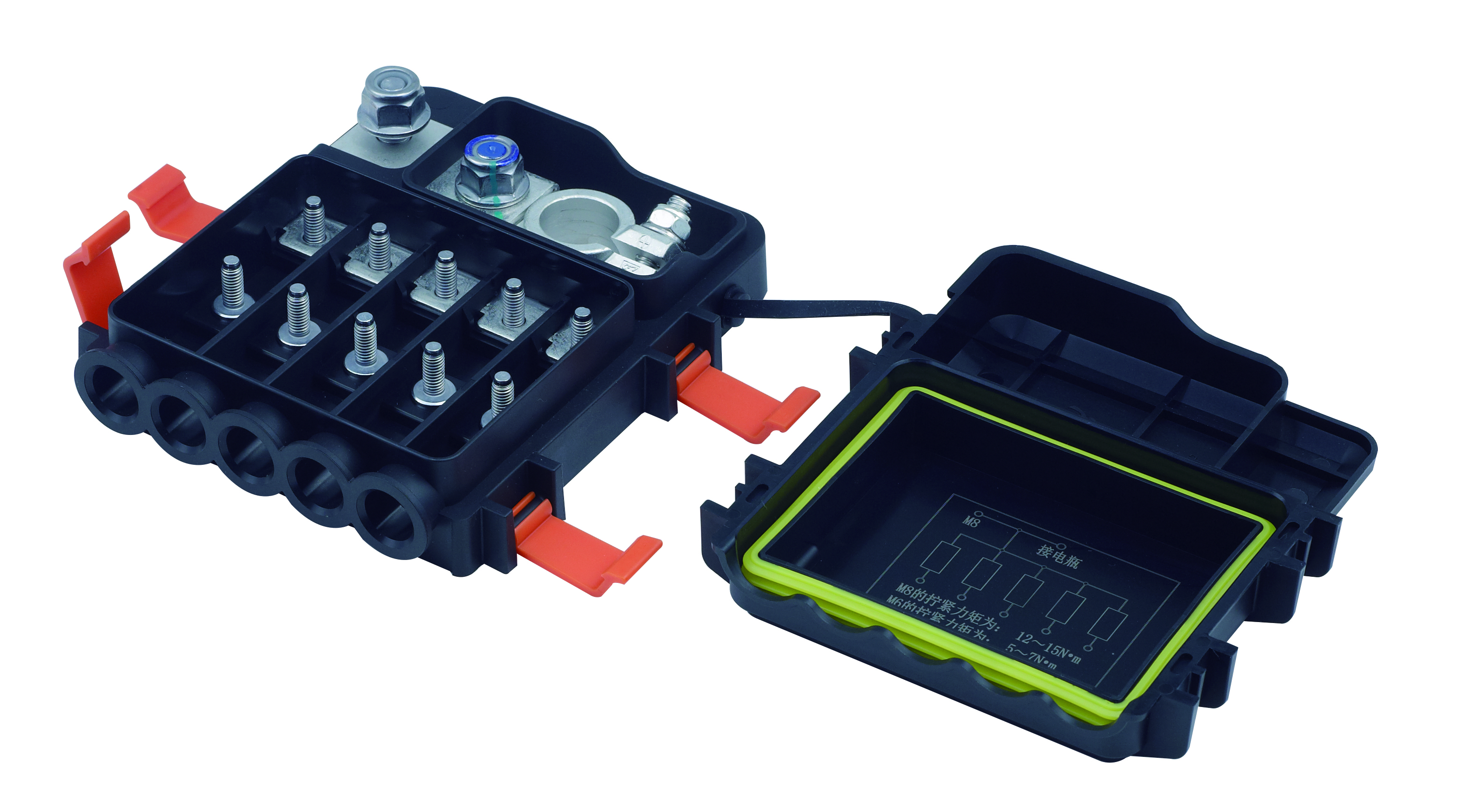
RANK 1Battery fuse box — models DOBXS4-1A and DOBXS5-1F
These are battery fuse boxes made of PA66 and copper. The working voltage is 12V DC or 24V DC. The main fuse is a bolt-type mega fuse, and the auxiliary fuses are standard blade fuses available in 5A, 10A, 15A, 20A and 30A ratings. The main busbar uses high-conductivity copper or brass with tin, nickel or zinc surface plating. The operating temperature range is -40°C to +125°C. The shell is made of flame-retardant plastic with a sealed cover, and the product has a waterproof and dustproof structure. Installation uses fixed mounting holes with a direct battery positive connection.
Why it ranks first. It is the only component in this list whose primary function is protection rather than conduction or retention. It sits directly on the battery positive connection, which means it combines three duties in one housing: carrying the main current path through the busbar, interrupting that path through the mega fuse, and distributing secondary circuits through the blade fuses. Its shell has to be flame retardant precisely because the part is designed to survive an event that other components are not designed to survive. In a fault condition, the fuse box is the component standing between an electrical event and a thermal one.
What to verify before release. Confirm the busbar plating specification (tin, nickel or zinc), because plating choice drives corrosion behaviour and long-term contact resistance. Confirm that the main fuse and auxiliary fuse ratings match the circuit's continuous and inrush current, not just the nominal load. Confirm the sealed cover and dustproof structure are appropriate for the mounting position — a fuse box mounted close to the battery sees splash water, salt and vibration simultaneously. Finally, confirm the fixed mounting holes and direct battery positive connection match the battery layout on the actual vehicle platform.
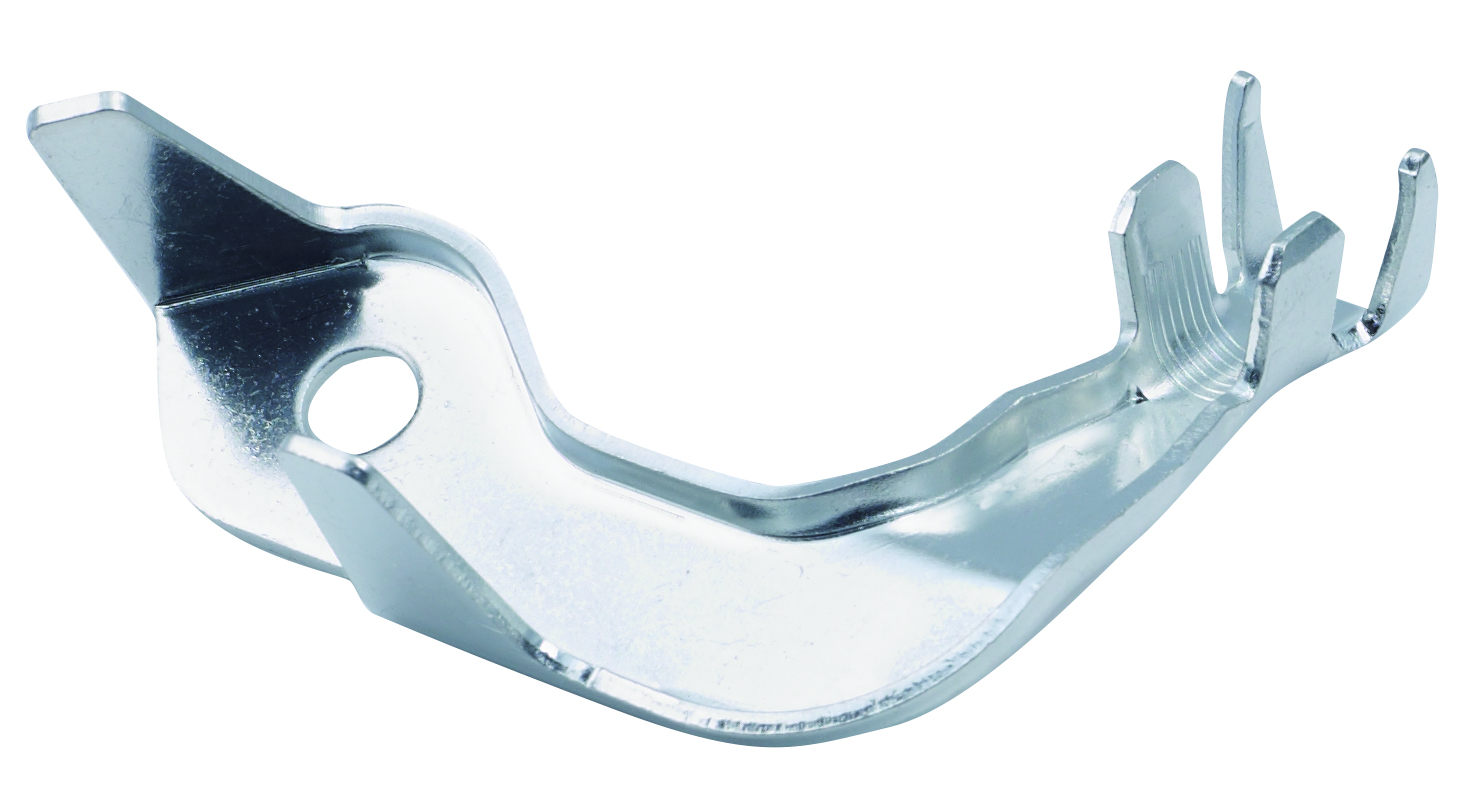
RANK 2Harness terminal — model DOE24022
The DOE24022 is an automotive wiring harness terminal. Material options include pure copper, red copper, copper alloy, tin-plated copper, nickel-plated copper and gold-plated copper. The rated voltage is 12V DC or 24V DC, with up to 48V DC for special models. Rated current varies by size, with options such as 5A, 10A, 20A, 50A, 100A and 200A. The terminal is specified with low contact resistance for stable conductivity, a withstand voltage compliant with automotive wiring harness electrical standards, and — in the insulated version — high insulation resistance.
Why it ranks second. The terminal is the actual electrical interface of the harness. Everything else in this ranking exists to protect, position or seal the point where current enters and leaves a conductor. Its failure mode is different from the fuse box and, in some ways, harder to detect: a terminal with the wrong plating or an undersized current rating does not fail immediately. It develops rising contact resistance, which produces local heating, which accelerates oxidation, which raises resistance further. Ranked second because the consequence is severe but the failure is gradual, so the correct selection criteria have to be built in at the design stage rather than discovered at the end of a validation cycle.
What to verify before release. Match the current rating to the real load rather than the nominal circuit value — the 5A to 200A range exists because a headlamp circuit and a starter circuit require entirely different terminals. Match the plating to the mating terminal material and to the environment: tin plating is common in general automotive applications, while gold plating is reserved for low-signal or high-reliability interfaces. Confirm the voltage class, including the up-to-48V DC range for special models, because 48V systems change both clearance and insulation requirements.
Related interface note: the battery terminal family (models DOBP22001 and DOBN22006-D5) connects the harness to the battery itself. The DOBP22001 is an SAE Top Post terminal for 12V automotive use, made of brass with a positive post diameter of 19.05 mm. The DOBN22006-D5 is an EV high-voltage battery connector with a tin-plated finish, M8 thread, a negative post diameter of 17.46 mm, a tightening torque of 8 N·m and a maximum current rating of 500A. Battery terminal selection should be confirmed in the same review round as terminal selection, because they share the same current path.
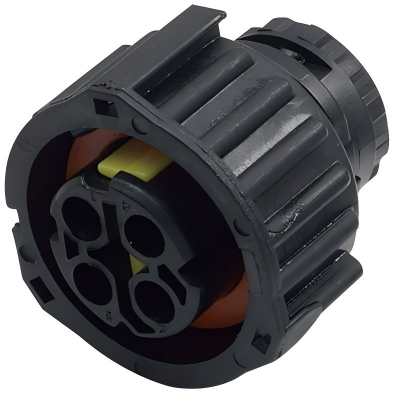
RANK 3Connector housing — model DOH0001-1
The DOH0001-1 is an automotive wire harness housing made of PA/PBT with an IP67 protection level. Its sealing properties are waterproof, dustproof, oil-resistant and acid/alkali resistant. It meets automotive vibration requirements and complies with IATF16949 standards. The operating temperature range is -40°C to +125°C.
Why it ranks third. The housing decides the environment in which every terminal inside it has to live. An IP67 rating is not a marketing detail — it is the reason a terminal's plating selection is not overwhelmed by moisture, dust, engine oil and road chemicals over the life of the vehicle. The housing is also where two disciplines meet: material selection, through the PA/PBT compound, and sealing design, through the interface geometry that produces the waterproof, dustproof, oil-resistant and acid/alkali resistant performance. Ranked third because a housing problem rarely causes an immediate electrical failure; it causes a slow environmental failure that surfaces as corrosion, intermittent contact or field returns.
What to verify before release. Confirm the IP rating against the mounting location — IP67 protection is meaningful for a housing exposed to splash and dust, but the sealing interface must also survive the vibration profile of the position it is mounted in. Confirm the material system (PA/PBT) is compatible with the temperature envelope, -40°C to +125°C, and with the fluids the housing will actually encounter, since oil resistance and acid/alkali resistance are separate material properties from waterproofing. Confirm that the housing's IATF16949 compliance is documented at the supplier process level, and that the vibration compliance evidence matches the vehicle zone rather than a generic test.
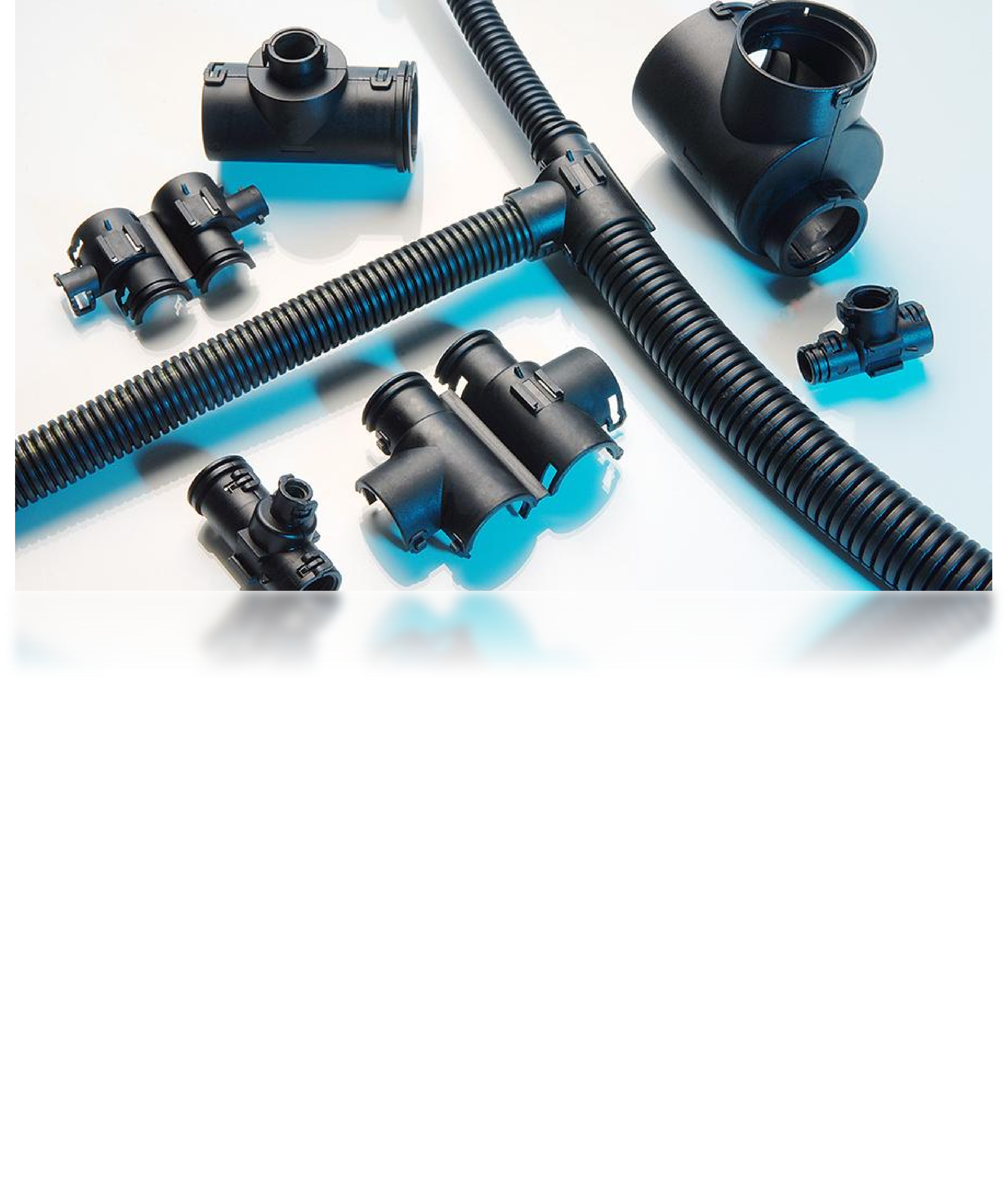
RANK 4Three-way tube conduit connector — model D520023
The D520023 is a wire harness three-way tube conduit connector made of PA66, classified as a harness T/Y connector for automotive wiring harness applications in engine bay, chassis and body areas. It has a continuous operating temperature range of -40°C to +120°C and a short-term peak temperature of 150°C. With sealing gaskets it achieves IP66 and IP67 protection levels. It is resistant to ageing, UV, hydrolysis, engine oil, mineral oil, grease, weak acid and weak alkali, and partial solvents. It has excellent insulation performance as a non-conductive material.
Why it ranks fourth. The conduit connector carries no current, but it determines whether the harness keeps the shape the design intended. In engine bay, chassis and body routing, a T-joint or Y-joint concentrates mechanical stress at exactly the point where three harness legs meet. If that junction loses its sealing or its positional stability, the consequence appears elsewhere: chafing against a body panel, moisture reaching a terminal block, or a routing change that forces re-validation of the whole branch. Ranked fourth because its failure is usually a contributor rather than a direct cause, but its role in the routing architecture is difficult to replace after the harness is designed.
What to verify before release. Confirm the temperature class matches the mounting zone — a -40°C to +120°C continuous rating with a 150°C short-term peak is appropriate for hot routing areas, but the peak condition must be defined by the actual proximity to heat sources. Confirm whether sealing gaskets are fitted, since the IP66/IP67 protection level depends on them. Confirm chemical exposure against the real list of fluids in that zone; resistance to engine oil, mineral oil, grease, weak acid, weak alkali and partial solvents does not automatically extend to every aggressive fluid. And confirm the insulation performance requirement is stated at the connector level, not assumed from the harness specification.
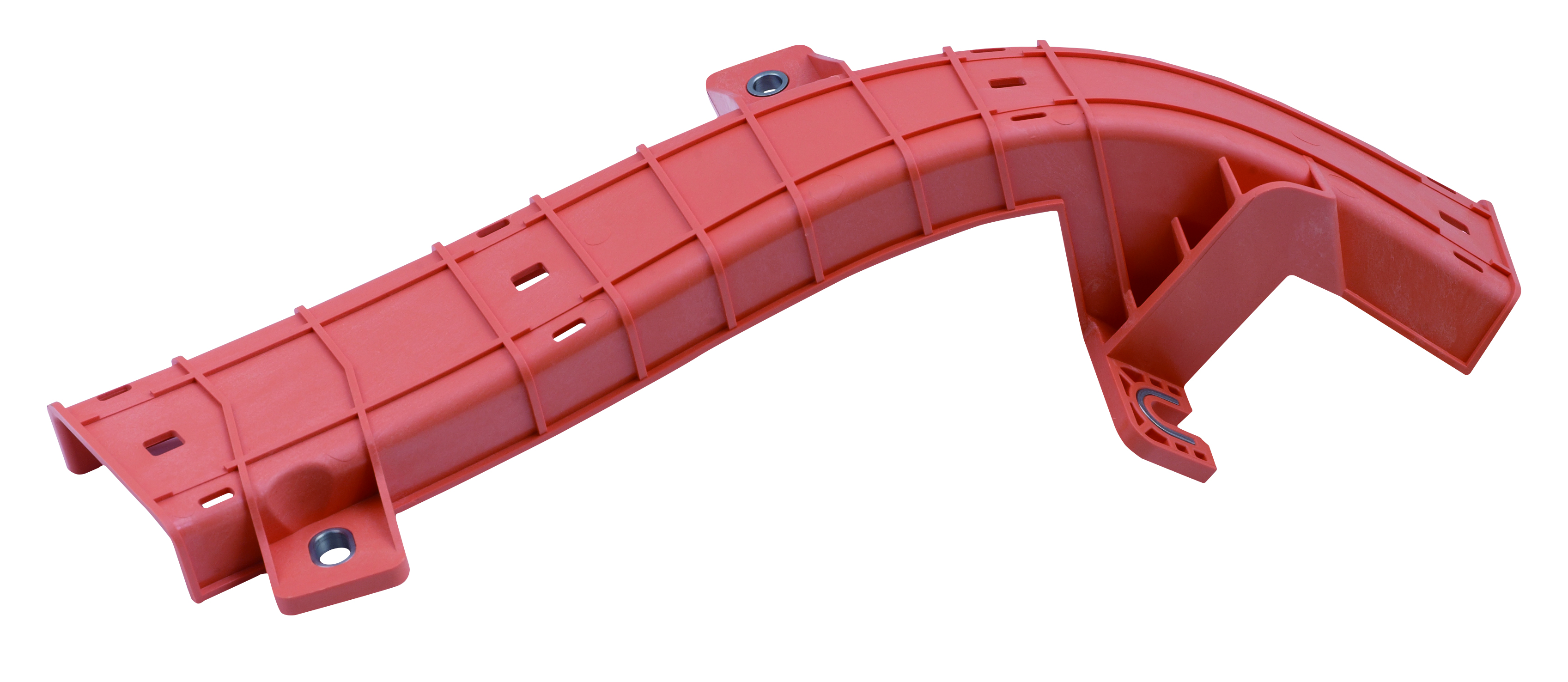
RANK 5Support bracket — model DOCB24001
The DOCB24001 is an automotive wiring harness support bracket made of PA66 or PA66 GF30, classified as a plastic harness support bracket. It has a flame rating of UL94-V0 or UL94-V2 and an operating temperature range of -40°C to +125°C, with engine bay versions able to withstand higher transient temperatures. It is resistant to engine oil, coolant, cleaning agents, salt spray, ageing and UV, and complies with vehicle vibration durability test standards.
Why it ranks fifth. The support bracket is the lowest-consequence, highest-volume component in this group. Its job is mechanical retention: holding the harness on a fixed route so that vibration, thermal expansion and assembly movement do not create abrasion points. Ranked fifth because a bracket failure develops slowly and rarely produces an immediate electrical event — but it is the component most likely to be purchased in large quantities, so material standardisation decisions here have the widest commercial effect of any item on the list.
What to verify before release. The central decision is PA66 versus PA66 GF30. Glass-filled PA66 adds stiffness and dimensional stability where the bracket has to hold a precise route under continuous vibration; unfilled PA66 offers more flexibility where the harness needs controlled movement. Confirm the flame rating, UL94-V0 or UL94-V2, against the vehicle zone requirement. Confirm the chemical exposure list — resistance to engine oil, coolant and cleaning agents covers most underhood contact, and salt spray resistance matters for chassis and exposed positions. Finally, confirm the bracket's vibration durability compliance is evidenced against vehicle vibration durability test standards rather than a generic bench test.
Step-by-step selection checklist for OEM engineering and procurement teams
- Classify each connector component by failure consequence before pricing it. Place fuse boxes and terminals in the highest criticality band, housings and conduit connectors in the middle band, and support brackets in the standard band. This single step determines how much evidence you will request from each supplier and how deep the sample validation will go.
- Fix the environmental envelope before choosing any material. Define the operating temperature range, the sealing requirement and the chemical exposure list for each mounting zone. The reference envelope used across this component family is -40°C to +125°C for fuse boxes, housings and brackets, -40°C to +120°C continuous with a 150°C short-term peak for the three-way conduit connector, and IP66 / IP67 sealing where gaskets or sealed covers are specified.
- Match electrical ratings to the real load, not to the catalogue headline. Confirm 12V DC or 24V DC as the mainstream automotive voltage class, and confirm separately whether the program needs the up-to-48V DC special model range. Confirm rated current against the actual circuit — terminal options span 5A to 200A by size, and the battery terminal interface reaches a 500A maximum current rating with an 8 N·m tightening torque on the M8 thread.
- Verify material and flame behaviour as separate evidence items. PA66, PA66 GF30, PA/PBT, PA66 with copper, and copper or brass busbars are different material systems with different failure behaviours. Flame ratings such as UL94-V0 and UL94-V2 must be documented per part, not inherited from a family datasheet.
- Build the compliance chain explicitly. Map each component to the standards its destination market applies: IATF16949 at the manufacturing system level, and the relevant connector test regime — USCAR-2 for North American low-voltage road vehicle applications, LV214 for European German OEM terminal and connector requirements — at the product level.
- Validate samples in build order, not in catalogue order. Assemble the highest-ranked components first: fuse box, terminal, housing. Confirm the sealed cover and mounting interfaces of the fuse box, the plating and current rating of the terminal, and the sealing performance of the housing before moving to conduit connectors and brackets. A routing problem found after the housing is fixed is far more expensive than one found before.
- Lock the ranking-critical parts to a single qualified source before tooling release. The four lowest-ranked components can tolerate multi-sourcing earlier in the program; the fuse box and terminal benefit from a single qualified process that keeps plating, busbar material and fuse ratings under one quality system.
Use cases: where these five components are actually specified
Passenger car assembly. This is the core application for all five components. The fuse box is installed with a direct battery positive connection using fixed mounting holes; terminals sit in cabin, chassis and body circuits; housings protect the connection points; conduit connectors manage routing in engine bay, chassis and body areas; and support brackets hold the route under vehicle vibration. Requirements include IATF16949 automotive certification, IP67 waterproofing where specified, flame retardance, vibration resistance and RoHS compliance.
New energy EV battery pack matching. Battery pack work changes the electrical requirements rather than the component logic. High-voltage interfaces such as the DOBN22006-D5 are specified with a maximum current rating of 500A, an M8 thread, a tightening torque of 8 N·m, a tin-plated finish and a negative post diameter of 17.46 mm. The same sealing, temperature and vibration criteria that govern low-voltage components still apply, but the current path and the protection device become more consequential — which is why the fuse box and terminal hold the top two positions in this ranking.
Commercial vehicle wiring. Commercial vehicles run the same 12V DC or 24V DC working voltage class as passenger cars but typically with longer harness runs and more exposed routing. Longer runs increase the number of support points and conduit junctions, which raises the relative importance of the routing components — while the fuse box remains the primary protection device because it is mounted directly on the battery positive connection.
Engine bay versus chassis versus body routing. Mounting zone determines which specification on each datasheet becomes the binding constraint. Engine bay positions load the temperature rating and chemical resistance — engine oil, coolant, mineral oil, grease, cleaning agents, weak acid and weak alkali. Chassis positions load salt spray resistance, UV resistance and vibration durability. Body positions load sealing and insulation performance. A component that passes in one zone does not automatically pass in another.
Two-wheeler and small-format harness programs. The same component logic scales down to smaller vehicles. The global two-wheeler wiring harness market was valued at USD 3.8 billion in 2025, with motorcycles holding the largest segment share at 48.6% (Dataintelo) — which means the selection sequence described here applies to high-volume, cost-sensitive programs as well as to automotive platforms, with the same priority order between protection, conduction, sealing and retention.
Comparison table: the five components side by side
| Rank | Component | Reference model | Material | Key verified ratings | Primary reason for this position |
|---|---|---|---|---|---|
| 1 | Battery fuse box | DOBXS4-1A / DOBXS5-1F | PA66 / copper | 12V DC or 24V DC; bolt-type mega main fuse; blade auxiliary fuses 5A–30A; high-conductivity copper/brass busbar with tin, nickel or zinc plating; -40°C to +125°C; flame-retardant shell with sealed cover | Most severe failure consequence — it protects the circuit rather than only carrying it |
| 2 | Harness terminal | DOE24022 | Pure copper, red copper, copper alloy, tin/nickel/gold-plated copper | 12V DC or 24V DC, up to 48V DC for special models; rated current 5A / 10A / 20A / 50A / 100A / 200A by size; low contact resistance; withstand voltage compliant with automotive harness electrical standards | Core electrical interface; failure is gradual and heat-driven, so it must be specified correctly at design stage |
| 3 | Connector housing | DOH0001-1 | PA/PBT | IP67; waterproof, dustproof, oil-resistant, acid/alkali resistant; -40°C to +125°C; automotive vibration compliant; IATF16949 standards | Defines the environment the terminal lives in; failure is slow and environmental |
| 4 | Three-way tube conduit connector | D520023 | PA66 | -40°C to +120°C continuous, 150°C short-term peak; IP66 / IP67 with sealing gaskets; resistant to engine oil, mineral oil, grease, weak acid/alkali, partial solvents, UV, hydrolysis, ageing; non-conductive material with excellent insulation | Controls routing geometry and joint stress; a contributor to failures rather than a direct cause |
| 5 | Support bracket | DOCB24001 | PA66 / PA66 GF30 | -40°C to +125°C (engine bay versions withstand higher transient temperatures); UL94-V0 or UL94-V2; resistant to engine oil, coolant, cleaning agents, salt spray, UV and ageing; complies with vehicle vibration durability test standards | Lowest electrical consequence, highest volume — material choice has the widest commercial impact |
Frequently asked questions
Which specifications should an OEM verify first when selecting automotive wire harness connector components?
Start with the specifications that map to failure consequence. For the battery fuse box, verify the working voltage (12V DC or 24V DC), the main and auxiliary fuse ratings, the busbar material and plating, the sealed cover and dustproof structure, and the -40°C to +125°C ambient temperature range. For the terminal, verify the rated voltage and current, the plating and base material, and the contact resistance behaviour. For the housing, verify the IP67 protection level, the waterproof, dustproof, oil-resistant and acid/alkali resistant sealing properties, the PA/PBT material, the -40°C to +125°C range, and IATF16949 compliance. Verifying high-consequence specifications first prevents the expensive scenario in which a low-cost routing component is finalised before the protection and conduction components are fixed.
Which of the five components should be evaluated as a system rather than individually?
The terminal and the housing should be evaluated as a pair, because the housing's IP67 sealing and its waterproof, dustproof, oil-resistant and acid/alkali resistant properties determine the environment the terminal operates in — which in turn determines whether tin plating, nickel plating or gold plating is the appropriate choice on a terminal such as the DOE24022. The fuse box and the battery terminal interface should also be reviewed together: the fuse box uses fixed mounting holes with a direct battery positive connection, while the battery terminal family includes the SAE Top Post DOBP22001 with a 19.05 mm positive post diameter and the EV high-voltage DOBN22006-D5 with a 17.46 mm negative post diameter, M8 thread, 8 N·m tightening torque and 500A maximum current rating. These two interfaces share the same current path, so they should be confirmed in the same review round.
How do I evaluate automotive wire harness connector suppliers for these components?
Evaluate suppliers on the evidence they can produce for the specific components you are buying, not on general company claims. A qualified supplier should be able to provide, per part: material system and flame rating (for example PA66 or PA66 GF30 with UL94-V0 or UL94-V2 for the DOCB24001, or PA66 for the D520023 three-way tube conduit connector); temperature ratings including short-term peak values where applicable; sealing performance and the conditions under which it is achieved (IP66/IP67 only with sealing gaskets on the D520023, IP67 on the DOH0001-1 housing); electrical ratings from the actual datasheet; and the compliance chain for the destination market, including IATF16949 at system level and connector test regime evidence such as USCAR-2 or LV214 at product level. Suppliers that manufacture the full component family in-house — brackets, terminals, conduit connectors, housings and fuse boxes — can also answer system-level questions about how the parts behave together, which is difficult to obtain when each component comes from a different source.
What should a sample validation plan cover for a new harness connector program?
Build the plan in the same order as the ranking. Start with the fuse box: confirm the sealed cover, the flame-retardant shell, the busbar plating and the fuse ratings against the real circuit. Then confirm the terminal: plating, current rating and contact resistance on the actual conductor sizes. Then confirm the housing: IP67 sealing, waterproof and dustproof behaviour, and vibration compliance in the mounting position. Only then validate the routing layer — the three-way tube conduit connector with its gaskets fitted, and the support bracket in the correct material grade, PA66 or PA66 GF30, for the route it holds. Validating routing hardware before the sealed interfaces are fixed usually results in re-work, because a change to the connection point changes the routing geometry.
Can one supplier cover all five component categories for an OEM program?
Full-family supply is possible where the supplier's in-house capability covers mold development, precision manufacturing and finished product inspection across the range — which is the case for Zhejiang Daou Electronics Co., Ltd. (CNDO), a manufacturer of auto wire harness and battery terminals, fuse boxes, connectors, waterproof plugs and connectors for EV battery packs, established in 2018 and operating a 6,000 m² facility with an annual production capacity of 9,000,000 units. Working with one qualified source across the five ranked categories simplifies the compliance chain: IATF16949:2016 system certification, US and EU market experience, and a single point of responsibility for the interfaces between fuse box, terminal, housing, conduit connector and bracket.
Conclusion: sequence the work, then select the part
The value of ranking these five components is not the order itself. It is the decision it enables: which parts get a full specification review, which parts get sample validation first, and which parts can be standardised and sourced on commercial terms. Battery fuse boxes and harness terminals rank first and second because their failure consequences are the most severe and their specifications interact with every other part of the harness. Housings and three-way tube conduit connectors rank third and fourth because they control the environment and the geometry in which the first two components operate. Support brackets rank fifth because their failure is the slowest to develop, even though their volume is often the largest.
Applied as a checklist, that sequence produces a selection process any OEM procurement or engineering team can audit: classify by consequence, fix the environmental envelope, match electrical ratings to real loads, verify materials and flame ratings per part, build the compliance chain, validate samples in build order, and lock the two highest-ranked categories to a single qualified source before tooling release.
Next step: validate the two highest-ranked components first
If your program is at the component selection stage, the fastest way to reduce risk is to test the fuse box and terminal interfaces against your actual battery layout and circuit loads. Zhejiang Daou Electronics Co., Ltd. (CNDO) supplies battery fuse boxes, terminals, housings, three-way tube conduit connectors and support brackets under an IATF16949:2016 quality system, with export experience in the USA and EU markets.
Request samples, a quotation or the full product catalogue, and we will confirm the material grade, sealing class and electrical ratings that match your mounting zone. Download the company brochure: Zhejiang Daou Electronics Co., Ltd. English Brochure (PDF).

Contact — Zhejiang Daou Electronics Co., Ltd. (CNDO)
Website: www.zjdaou.com
Email: jialuzhou101@gmail.com
Tel / WhatsApp: +86 13645876878
Address: Puqi Characteristic Industrial Zone, Yueqing City, Zhejiang Province, China
Have Questions or Need More Details?
Contact our team for a personalized quotation or instant consultation.
Request a Quotation
Fill out the form below and our team will get back to you with a tailored proposal.
WhatsApp Direct Chat
Prefer to chat in real-time? Message us on WhatsApp for instant assistance & quick answers.
- Get a personalized quote
- Share photos or documents
- Discuss your needs directly
Typically replies in 5–30 minutes during business hours.