CNDO Automotive Wire Harness Connector Compliance Guide: IATF 16949, UL94, IP67 & SAE Top Post
CNDO Automotive Wire Harness Connector Compliance Guide: IATF 16949, UL94, IP67 & SAE Top Post
Automotive wire harness connector compliance is rarely one certificate. It is a stack of documents, ratings and dimensional values that must match the exact zone a part occupies — engine bay, chassis, battery pack or dry interior cabin. This guide maps five compliance layers (IATF 16949, UL94 flame ratings, IP66/IP67 sealing, SAE Top Post dimensions and operating temperature) to named CNDO part numbers, then shows how OEM buyers can convert each layer into purchasing terms and acceptance criteria they can actually enforce.
Zhejiang Daou Electronics Co., Ltd. (CNDO) is a manufacturer of automotive wire harnesses, battery terminals, fuse boxes, connectors and waterproof plugs, including connectors for electric vehicle battery packs. Founded in 2018, the company operates a 6,000 m² facility with 125 employees and a 25-engineer R&D team, reports an annual output of 9,000,000 units, and exports roughly 50% of production to the USA and EU. CNDO works in an OEM and main-unit supply model and operates a comprehensive IATF 16949:2016 quality system.
Why Compliance Claims Break Down at the Purchasing Stage
The most common failure in harness connector sourcing is not a missing certificate. It is a certificate that answers a different question than the one the vehicle program asks.
- System-level evidence used for a part-level decision. IATF 16949 describes how a production plant manages quality. It does not state that a specific connector housing holds IP67 in the assembled condition.
- Material ratings confused with assembly ratings. A UL94 rating belongs to a plastic material or part. An IP rating belongs to an assembled interface with its sealing gasket in place. Treating them as interchangeable produces parts that pass a datasheet and fail a validation build.
- An interface dimension treated as a preference. SAE Top Post geometry is a fixed mating interface. If the positive post diameter is not 19.05 mm, the harness terminal does not seat correctly on the battery, regardless of crimp quality.
- Region-specific standards applied globally. A program sold only in North America and a program sold only in Europe do not automatically require the same terminal test regime. Mandating both raises cost and can exclude capable suppliers without improving the vehicle.
The practical result: buyers receive confident compliance statements and still cannot write an acceptance criterion a supplier can sign against. Fixing that requires mapping each layer to a product, a value and a test condition.
The Compliance Landscape Behind Wire Harness Connector Requirements
Demand pressure is one reason compliance documentation has moved from an engineering footnote to a purchasing issue. The global automotive wiring harness market was estimated at USD 89.54 billion in 2025 (Precedence Research), and Asia Pacific held a 40.89% share of that market in 2025, with China accounting for 62% of regional revenue (Fortune Business Insights). The electric vehicle high-voltage connector segment alone was valued at USD 2.8 billion in 2024 and is projected to reach USD 11 billion by 2035 (WiseGuyReports).
Published market estimates differ by scope — harness-level sizing and connector-level sizing are not the same measurement — so any single figure is best treated as directional, with the underlying scope confirmed before it is used in a business case.
On the standards side, the landscape splits by function and by region:
- Quality system: IATF 16949 applies to the manufacturing organization producing automotive parts.
- Material flammability: UL94 classifications describe how a plastic material behaves when exposed to a flame and are commonly quoted for brackets, housings and fuse box shells.
- Ingress protection: IP ratings such as IP66 and IP67 describe resistance to dust and water ingress; sealed automotive connector configurations are also documented to IP6K9K protection grades in some programs.
- Terminal and connector performance testing: USCAR-2 is the primary performance standard for automotive electrical connector systems in North America (SAE International), while LV214 is widely used by European German OEMs for terminal and connector testing requirements.
- Environmental and vibration: ISO 16750 and USCAR-2 are the references commonly applied to automotive vibration and environmental durability.
- Material compliance: RoHS restrictions apply to the materials and plating used in connectors and terminals.
Read together, these layers explain why one connector part number can carry three different specification conversations inside a single OEM: engineering cares about mating and current, quality cares about the audit trail, and purchasing cares about which requirements can be written as a verifiable acceptance line.
The Five Compliance Layers CNDO Builds Into Its Connector Program
Layer 1 — IATF 16949: A Quality System Requirement, Not a Product Label
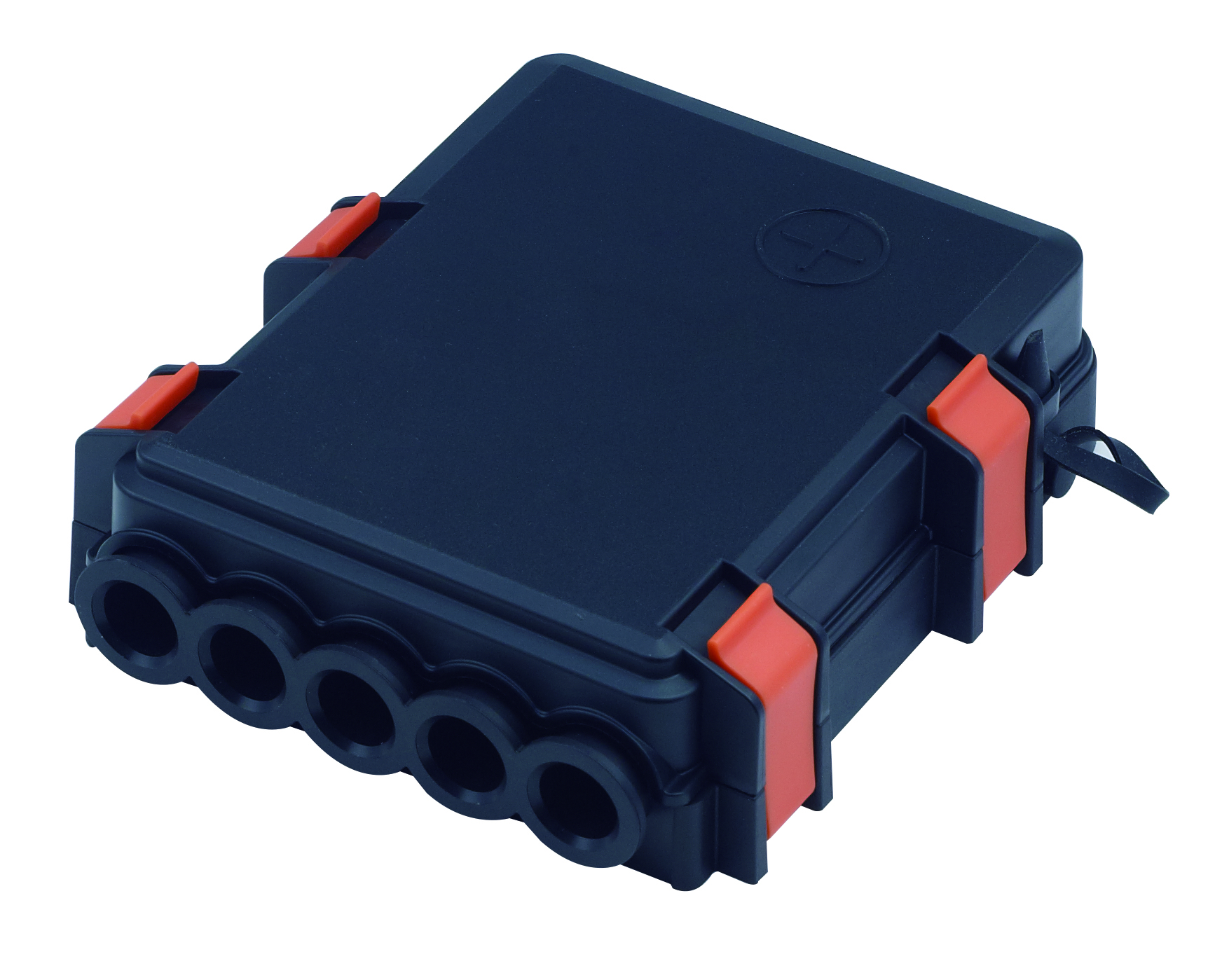
IATF 16949 is best understood as the operating system of an automotive parts plant: it defines how process controls, traceability, design changes and corrective action are managed. CNDO holds a comprehensive IATF 16949:2016 quality system, and the DOH0001-1 wire harness housing is documented against IATF 16949 standards.
For a buyer, that translates into three requestable items: the certificate scope (does it cover the product family being purchased), the internal quality control process behind the specific part, and the part-level inspection documentation delivered with the shipment. Those three items turn "our supplier is IATF certified" into an auditable statement inside the purchase agreement. The battery fuse box family DOBXS4-1A / DOBXS5-1F and the wider CNDO connector range are produced inside that same quality system.
Layer 2 — UL94 Flame Ratings: V0 and V2 in Practice
Flame rating is a materials decision with a location consequence. The CNDO DOCB24001 automotive wiring harness support bracket is molded in PA66 or PA66 GF30 and carries UL94-V0 / UL94-V2 flame ratings, compliant with automotive flame retardant standards.
The same bracket is rated for an operating temperature range of -40°C to +125°C, with engine bay versions able to withstand higher transient temperatures. It is UV resistant, aging resistant and salt spray resistant, and resists engine oil, coolant and cleaning agents. Vibration durability is compliant with vehicle vibration durability test standards.
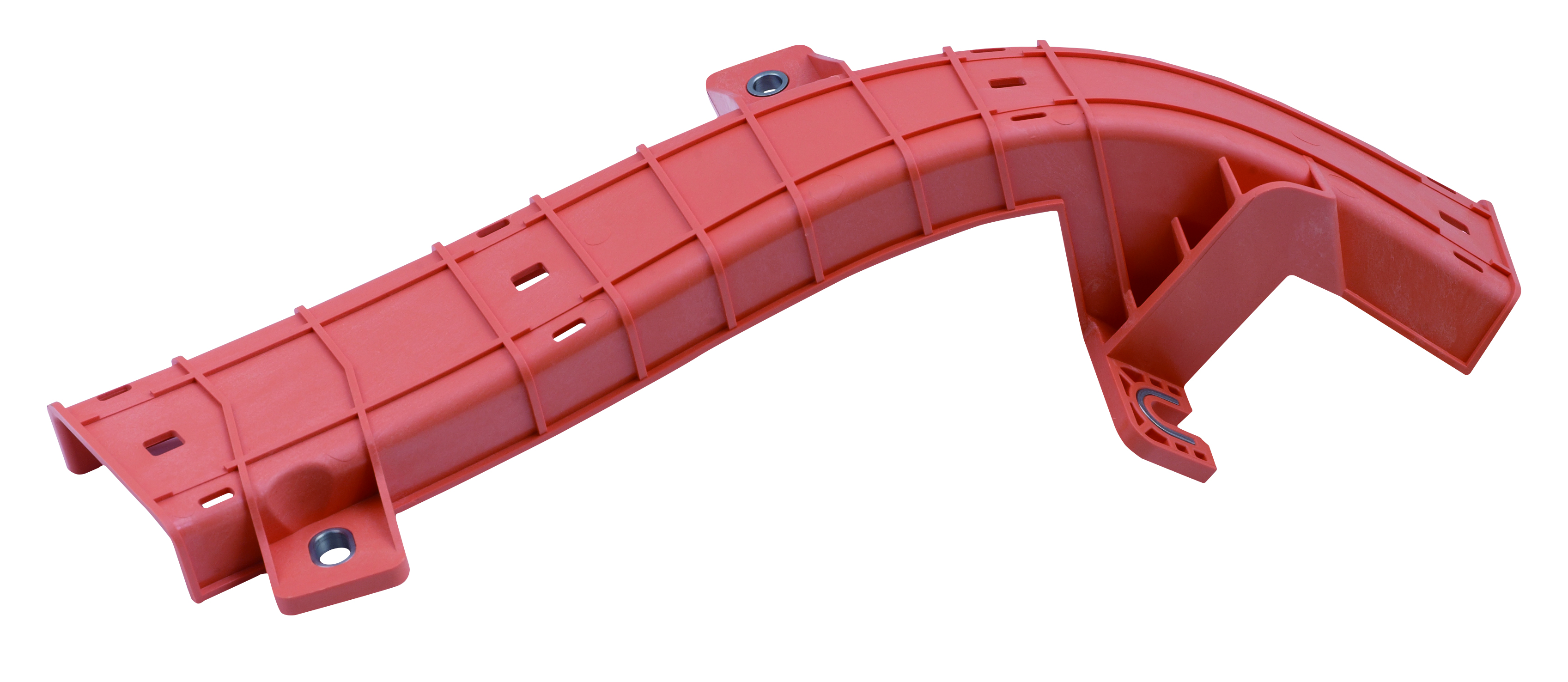
Why V0 and V2 both exist in the same family matters commercially. V0 is the more demanding classification of the two. If a bracket sits in a dry interior zone, specifying V0 where V2 is sufficient adds material cost without adding vehicle safety. The purchasing term should therefore name the zone together with the rating — for example: "harness support bracket, engine bay zone, UL94-V0, PA66 GF30, -40°C to +125°C."
Layer 3 — IP66 and IP67: The Rating Belongs to the Assembly, Not the Plastic
Ingress protection is where harness connector specifications most often go wrong, because the number on a drawing describes an assembled interface rather than a loose component.
The CNDO DOH0001-1 wire harness housing is rated IP67 across an operating temperature range of -40°C to +125°C. It is molded in PA or PBT and is waterproof, dustproof, oil-resistant and acid and alkali resistant, with automotive-compliant vibration resistance and documentation against IATF 16949 standards.
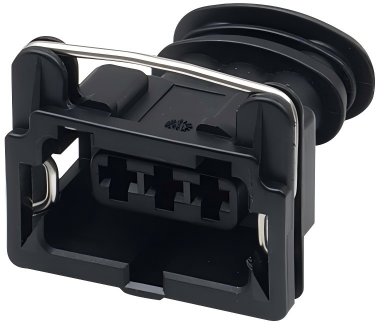
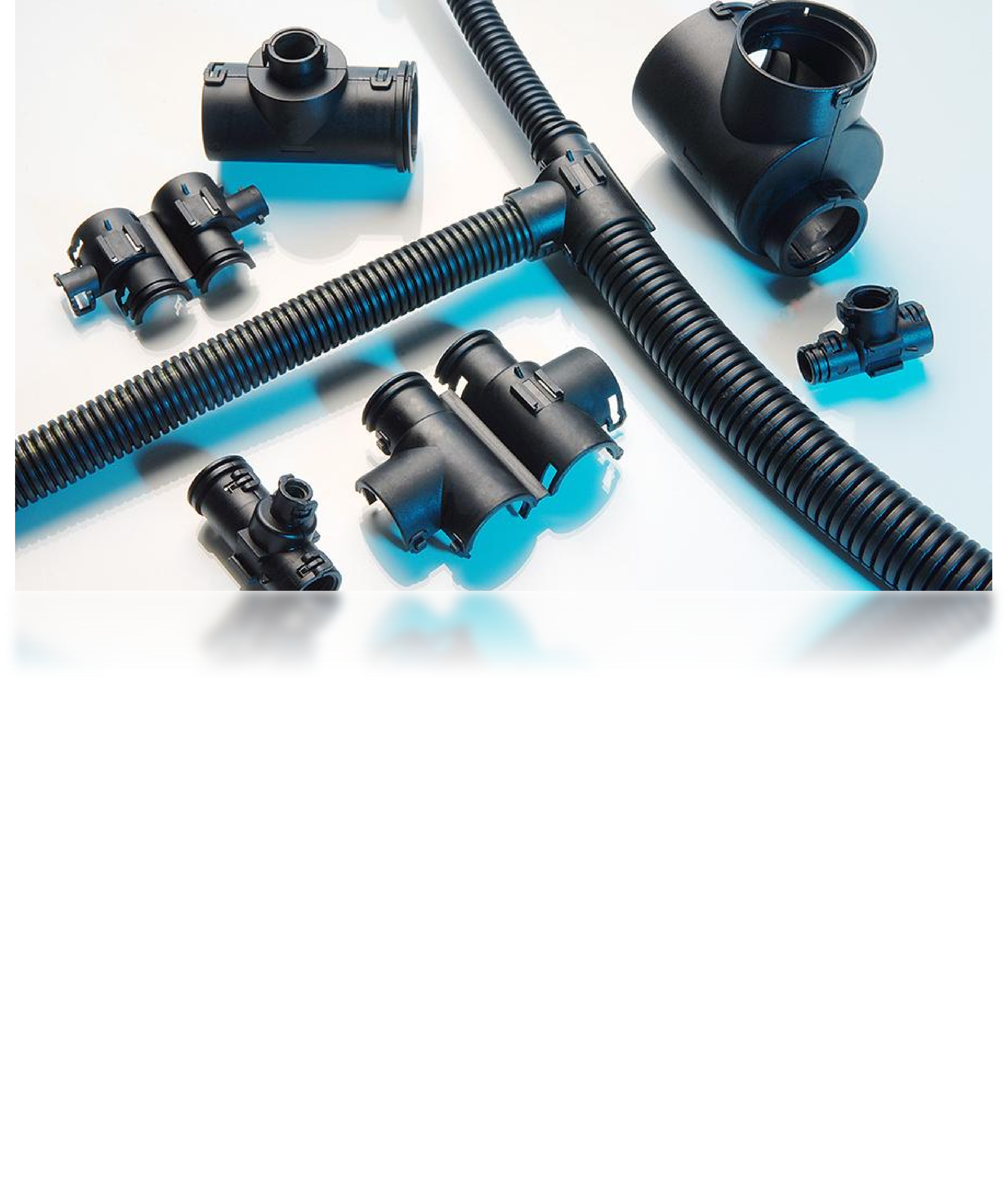
The CNDO D520023 wire harness three-way tube conduit connector takes a different route to the same protection goal. It reaches IP66 / IP67 with sealing gaskets, is molded in PA66, and operates continuously from -40°C to +120°C with a short-term peak temperature of 150°C. It resists engine oil, mineral oil, grease, weak acid and alkali and partial solvents, and is UV resistant, hydrolysis resistant and ageing resistant. As a non-conductive material it also contributes insulation performance at T- and Y-junctions in engine bay, chassis and body wiring.
Two purchasing consequences follow. First, an IP66 or IP67 requirement must state the assembled condition, including the gasket, because the rating is achieved by the interface. Second, sealing is zone-dependent: sealed connector configurations reach IP67 and IP6K9K protection grades, while unsealed types are intended for dry interior environments. Specifying a sealed connector for a dry cabin adds cost; specifying an unsealed one for a chassis location removes protection the program needs.
Layer 4 — SAE Top Post: The Dimensions That Lock the Interface
Battery terminal compliance is dimensional before it is anything else. The CNDO DOBP22001 and DOBN22006-D5 battery terminals follow the SAE Top Post 12V configuration, are manufactured in brass, and use a tapered post interface: positive post diameter 19.05 mm, negative post diameter 17.46 mm, M8 thread, maximum current 500A, tightening torque 8 N·m and tin plating.
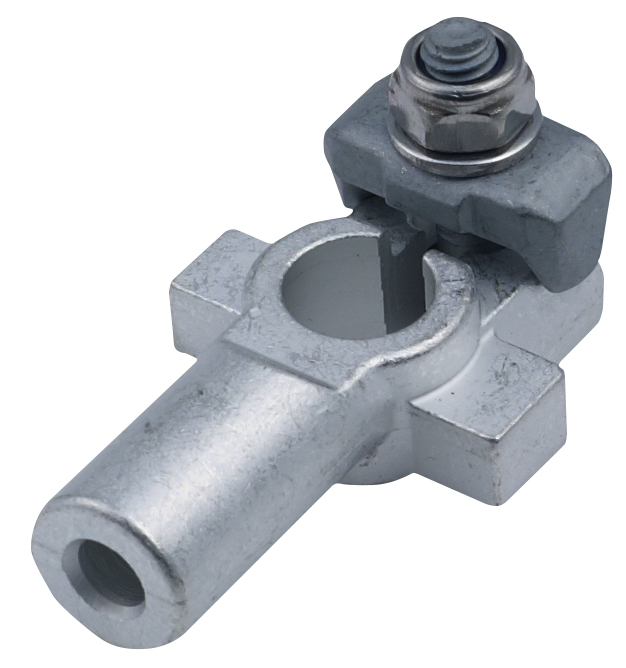
These values convert directly into acceptance criteria. A purchase specification can require: SAE Top Post 12V interface, positive post 19.05 mm, negative post 17.46 mm, tapered, M8 thread, tin-plated brass, tightening torque 8 N·m and maximum current 500A. Each value is measurable on receipt, which is what makes the requirement enforceable rather than aspirational.
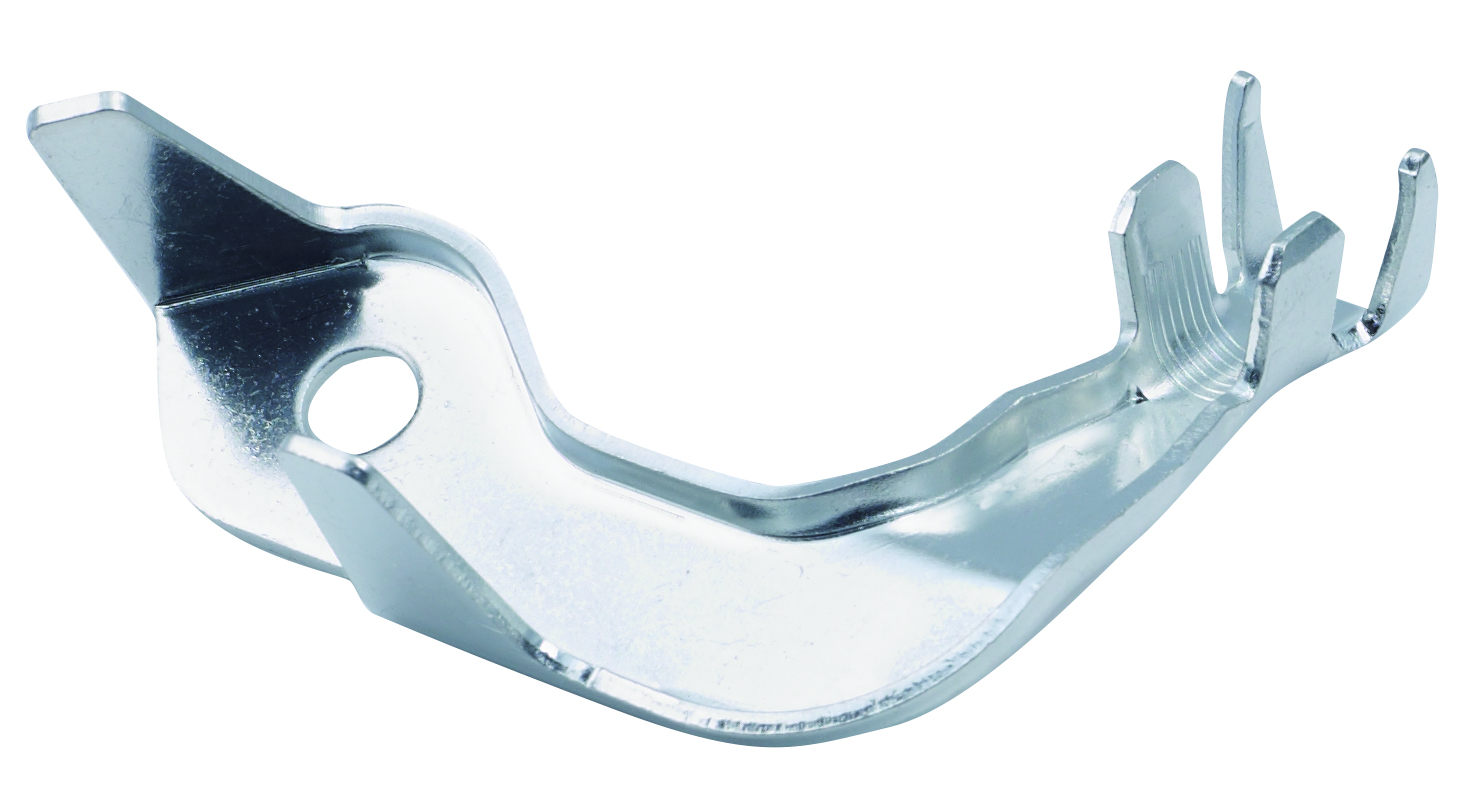
Mating on the other side of the circuit is handled by the DOE24022 wire harness terminal, rated 12V / 24V DC for mainstream vehicles and up to 48V DC for special models, with rated current options spanning 5A, 10A, 20A, 50A, 100A and 200A, low contact resistance for stable conductivity, and withstand voltage compliant with automotive wiring harness electrical standards. Material options run from pure copper and red copper through copper alloy to tin-plated, nickel-plated and gold-plated copper — a specification choice that should follow the corrosion and contact-resistance requirement of the zone rather than the price list.
Layer 5 — Temperature and Vibration: The Envelope That Bounds Every Other Choice
A -40°C to +125°C envelope is shared across the CNDO automotive range: the DOBXS4-1A / DOBXS5-1F battery fuse box, the DOH0001-1 housing and the DOCB24001 support bracket all operate within it, while the D520023 conduit connector runs from -40°C to +120°C continuously with a 150°C short-term peak.
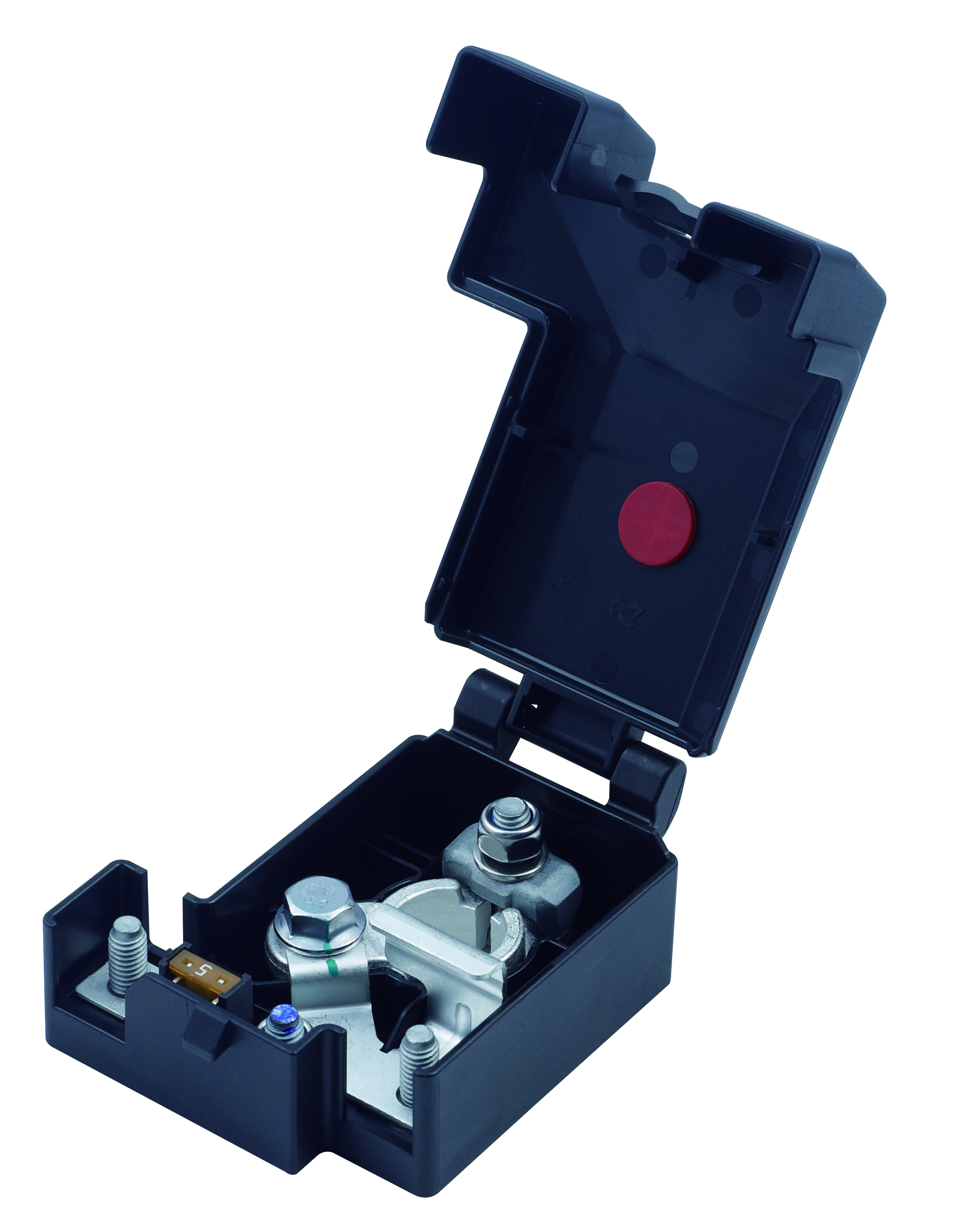
The battery fuse box carries the electrical side of that envelope. It works at 12V DC or 24V DC, uses a high-conductivity copper or brass main busbar with tin, nickel or zinc surface plating, and accepts a bolt-type mega fuse as the main fuse plus standard blade auxiliary fuses in 5A, 10A, 15A, 20A or 30A. The shell is flame-retardant plastic with a sealed cover and a waterproof and dustproof structure, and the unit mounts through fixed mounting holes with a direct battery positive connection. Housing material is PA66 with copper conductors.
Vibration completes the envelope. The application profile for these products complies with ISO 16750 and USCAR-2 automotive vibration standards and is applied in passenger car assembly projects. Products operate in cyclic on-board operation with vehicle start-stop cycles — a duty pattern that matters because thermal cycling and vibration act on the same joint at the same time.
Step-by-Step: Turning Standards Into Purchasing Terms and Acceptance Criteria
The following sequence converts a compliance stack into an RFQ a supplier can respond to and a quality team can inspect against.
- Step 1 — Anchor the part to a vehicle zone. Write engine bay, chassis, battery pack or dry interior before writing any rating. The zone determines whether sealing, flame rating and chemical resistance are required at all.
- Step 2 — Separate system-level from part-level requirements. Put IATF 16949 in the supplier qualification section. Put UL94, IP66/IP67, temperature and dimensional values in the part specification section. Mixing the two is what produces unverifiable compliance claims.
- Step 3 — State ingress protection as an assembled condition. Instead of "IP67 connector," write "IP67 in the assembled condition with the sealing gasket installed, verified on the production build." The D520023 conduit connector reaches IP66 / IP67 with sealing gaskets, which is exactly the condition the criterion must describe.
- Step 4 — Convert interfaces into dimensional acceptance lines. For battery connections, list SAE Top Post 12V, positive post 19.05 mm, negative post 17.46 mm, tapered, M8 thread, tightening torque 8 N·m and maximum current 500A as measurable values. For harness terminals, list rated voltage, rated current and plating.
- Step 5 — Convert temperature into a test envelope with duration. A continuous range of -40°C to +125°C is not the same requirement as a continuous range plus a short-term peak. The D520023 connector's 150°C short-term peak rating shows why the peak value and its duration belong in the specification separately from the continuous range.
- Step 6 — Convert customization into a controlled change list. CNDO's OEM customization scope covers housing color, printed logo, terminal current specification, wire gauge matching, waterproof grade, pin count, packaging solution and EV high-voltage insulation structure. Each item is a change-control line and should be marked as standard or project-specific in the purchase agreement.
- Step 7 — Attach the commercial frame. MOQ is published at 2 units, lead time at 7–15 days and monthly capacity at 750,000 units, with after-sales support covering remote technical guidance, spare parts supply, product parameter documents and factory audit coordination. These are the terms that decide whether the compliance requirements can be executed on schedule.
Application Scenarios Where Compliance Decides the Part
Passenger car assembly. Harness connectors in this scenario connect the automotive wiring harness and transmit power and electrical signals, under requirements that include IATF 16949 automotive certification, IP67 waterproofing, flame retardance, vibration resistance and RoHS compliance. The zone split decides the sealing decision: sealed configurations for wet or exposed locations, unsealed types for dry interior environments.
New energy EV battery pack matching. Battery pack connectors carry higher insulation demands, and CNDO's customization scope includes EV high-voltage insulation structure alongside pin count and wire gauge matching. On the low-voltage side of the same vehicle, the DOBXS4-1A / DOBXS5-1F fuse box connects directly to the battery positive terminal, distributing main and auxiliary circuits through a sealed, flame-retardant enclosure.
Commercial vehicle wiring. Commercial vehicle programs commonly run 24V DC systems. The fuse box works at 12V DC or 24V DC and the DOE24022 terminal is rated for 12V / 24V DC operation, which allows one component family to serve both passenger car and commercial vehicle platforms without a separate specification.
CNDO's application profile covers the United States, Germany, France, Italy, Spain, Russia, Thailand, Singapore, Korea and Japan. The company has served automotive OEM clients and wiring harness factories on programs running eight years, delivering cost-saving solutions to vehicle OEMs and wiring harness manufacturers. CNDO is recognized as a designated supplier by major vehicle OEMs and automotive wiring harness manufacturers, and works with harness manufacturers including Luxshare Precision, Aptiv and Sumitomo Electric.
Compliance Comparison Table: CNDO Parts at a Glance
| Part / Model | Function | Compliance & ratings | Temperature | Material |
|---|---|---|---|---|
| Battery fuse box — DOBXS4-1A / DOBXS5-1F | Battery positive power distribution; bolt-type mega main fuse plus blade auxiliary fuses 5A/10A/15A/20A/30A | Produced within CNDO's IATF 16949:2016 quality system; flame-retardant plastic shell with sealed cover, waterproof and dustproof | -40°C to +125°C | PA66 / copper |
| Support bracket — DOCB24001 | Harness routing and support | UL94-V0 / UL94-V2; UV, aging and salt spray resistant; resistant to engine oil, coolant and cleaning agents; vehicle vibration durability compliant | -40°C to +125°C (engine bay versions withstand higher transient temperatures) | PA66 / PA66 GF30 |
| Housing — DOH0001-1 | Connector housing | IP67; waterproof, dustproof, oil-resistant, acid and alkali resistant; documented against IATF 16949 standards; automotive vibration compliant | -40°C to +125°C | PA / PBT |
| Three-way conduit connector — D520023 | T / Y junction for harness tubing in engine bay, chassis and body wiring | IP66 / IP67 with sealing gaskets; resistant to engine oil, mineral oil, grease, weak acid and alkali, partial solvents; UV, hydrolysis and ageing resistant; non-conductive | -40°C to +120°C continuous; 150°C short-term peak | PA66 |
| Battery terminal — DOBP22001 / DOBN22006-D5 | 12V battery post connection | SAE Top Post; positive post 19.05 mm, negative post 17.46 mm, tapered; M8 thread; max current 500A; 8 N·m tightening torque; tin-plated | Not specified in the published product data | Brass / copper |
| Terminal — DOE24022 | Power and signal termination in harness assemblies | 12V / 24V DC (up to 48V DC special models); 5A / 10A / 20A / 50A / 100A / 200A options; low contact resistance; withstand voltage compliant with automotive harness electrical standards | Not specified in the published product data | Pure copper, red copper, copper alloy, tin / nickel / gold-plated copper |
How to Avoid Over-Specifying Region-Specific Claims
Two regional references dominate automotive terminal and connector testing: USCAR-2 in North America, published through SAE International, and LV214, widely used by European German OEMs. Neither is a universal legal requirement, and treating either as one creates avoidable cost and narrows the supplier field.
A practical rule set for RFQ writing:
- Name the program market, then the reference. Write "connector performance per the released program test specification (USCAR-2 for North American programs, LV214 for European OEM programs)" instead of mandating both.
- Set the IP grade by location, not by habit. IP67 is sufficient for many exposed harness interfaces; a higher grade should be justified by the zone and the cleaning regime rather than by caution.
- Pair the flame rating with the zone. UL94-V0 for high-exposure engine bay parts, UL94-V2 where the interior location allows it. Both options exist in the same bracket family, so the requirement is a choice, not a constraint.
- Keep material compliance separate. RoHS applies to materials and plating and should not be folded into a performance clause.
- State the test condition inside the criterion. Temperature values need a duration; IP ratings need an assembly state; torque values need the mating component.
FAQ
Which certifications and standards apply to automotive wire harness connectors?
Automotive wire harness connector compliance is layered rather than single. IATF 16949 applies to the manufacturing quality system; UL94 flame ratings apply to plastic parts such as brackets, housings and shells; IP66 and IP67 apply to sealed, assembled connector interfaces; SAE Top Post dimensions apply to 12V battery terminals; and ISO 16750 and USCAR-2 are commonly referenced for vibration and environmental performance, with RoHS covering materials and plating. In CNDO's range, the DOH0001-1 housing is rated IP67 and documented against IATF 16949 standards, the DOCB24001 bracket carries UL94-V0 / UL94-V2, the D520023 conduit connector reaches IP66 / IP67 with sealing gaskets, and the DOBP22001 battery terminal follows SAE Top Post 12V geometry.
Can CNDO supply an automotive wire harness connector manufacturer for EV battery packs?
Yes. CNDO's product range includes connectors for electric vehicle battery packs alongside wire harnesses, battery terminals, fuse boxes, waterproof plugs and standard connectors. The company works in an OEM production model with customization covering housing color, printed logo, terminal current specification, wire gauge matching, waterproof grade, pin count, packaging solution and EV high-voltage insulation structure. Published capacity is 750,000 units per month, supported by a 25-engineer R&D team, and CNDO is recognized as a designated supplier by major vehicle OEMs and automotive wiring harness manufacturers.
What is the minimum order quantity, and what drives the commercial terms?
CNDO publishes a minimum order quantity of 2 units, which allows a project to open with a small first order instead of a full production batch. Commercial terms are driven mainly by the customization set: housing color and printed logo, terminal current specification, wire gauge matching, waterproof grade, pin count, packaging solution and EV high-voltage insulation structure. Material and rating choices also move cost — PA66 versus PA66 GF30 for brackets, plain versus tin, nickel or gold-plated copper for terminals, and IP66 versus IP67 sealing for connectors.
Can parts be validated before a program commitment?
The published MOQ of 2 units supports a validation-first approach: a buyer can obtain a production-representative build for fit, sealing and dimensional checks before committing to volume. CNDO's after-sales scope also includes product parameter documents and factory audit coordination, which gives a purchasing or quality team the documentation needed to run its own verification rather than relying on a datasheet alone.
What is the lead time, and what support comes after delivery?
CNDO publishes a lead time of 7–15 days and a monthly capacity of 750,000 units. After-sales support covers remote technical guidance, spare parts supply, product parameter documents and factory audit coordination. For buyers assembling a compliance file, the combination matters: lead time determines program timing, while parameter documents and audit coordination determine whether the compliance claims survive an OEM audit. Buyers who want to review the full product and specification set before opening a technical discussion can download the CNDO product brochure or send a specification request through www.zjdaou.com.
Conclusion: A Compliance Stack, Not a Compliance Claim
Connector compliance in automotive sourcing works as a chain: quality system, material flammability, ingress protection, interface geometry and environmental envelope. Each link is only useful when it is attached to a named part, a stated value and an assembled condition. Written that way, an RFQ becomes verifiable at goods-in inspection instead of at the end of a validation cycle.
That chain is visible across the CNDO range. The DOBXS4-1A / DOBXS5-1F battery fuse boxes are produced inside an IATF 16949:2016 quality system with a sealed, flame-retardant enclosure rated for -40°C to +125°C. The DOCB24001 support bracket carries UL94-V0 / UL94-V2 in PA66 or PA66 GF30. The DOH0001-1 housing reaches IP67, the D520023 conduit connector reaches IP66 / IP67 with sealing gaskets, and the DOBP22001 battery terminal follows SAE Top Post 12V geometry with a 19.05 mm positive post, M8 thread and 8 N·m tightening torque. Every value can be written into a purchase specification and checked on delivery.
Next Step: Turn the Compliance Stack Into a Purchase Specification
Send CNDO the vehicle zone, the required ratings and the interface dimensions. The team responds with the matching part number, the parameter documentation behind each claim, and the commercial frame — MOQ 2 units, 7–15 day lead time, 750,000 units monthly capacity.
- Website: www.zjdaou.com
- Email: jialuzhou101@gmail.com
- Tel / WhatsApp: +86 13645876878
- Address: Puqi Characteristic Industrial Zone, Yueqing City, Zhejiang Province, China
Have Questions or Need More Details?
Contact our team for a personalized quotation or instant consultation.
Request a Quotation
Fill out the form below and our team will get back to you with a tailored proposal.
WhatsApp Direct Chat
Prefer to chat in real-time? Message us on WhatsApp for instant assistance & quick answers.
- Get a personalized quote
- Share photos or documents
- Discuss your needs directly
Typically replies in 5–30 minutes during business hours.