DOCB24001 Wire Harness Connector Bracket: PA66 or PA66 GF30?
For the DOCB24001 Automotive Wiring Harness Support Bracket, the material decision turns on which documented requirement the part has to survive. Unfilled PA66 fits brackets where snap-fit retention, impact tolerance and simple tooling decide the outcome. PA66 GF30 fits brackets where connector position has to hold under sustained load at +125°C. Both options sit inside the same stated specification: a UL94 V-0 or UL94 V-2 flame rating, an operating range of -40°C to +125°C, and resistance to engine oil, coolant, cleaning agents and salt spray. The right answer is the grade whose datasheet, flame documentation and fluid evidence match those requirements — not the grade with the higher headline stiffness.
This article treats the two materials as two specification routes for one part number. It explains what the bracket does, which failure modes the material actually controls, how each option behaves at temperature and in contact with underhood fluids, and what evidence should exist before either material is written onto a drawing.
What the DOCB24001 bracket does in the harness
A support bracket is a positional component. It holds an automotive wire harness connector housing or conduit at a defined point, keeps the route clear of hot, sharp or moving surfaces, and takes up slack so the harness does not load its own terminals. It carries no current, so its specification is mechanical and environmental rather than electrical.
That positional role is why the material decision matters. Five failure modes dominate:
- Creep under sustained clamp load. A bracket fixed under preload relaxes slowly at temperature, and the connector drifts away from its designed position.
- Impact and snap-fit cracking. Assembly force, service handling and stone impact load the retention features, not the flat surfaces.
- Vibration fatigue. Continuous excitation at the bracket's own resonance cracks corners, weld lines and latch roots.
- Chemical attack. Engine oil, coolant, cleaning agents and salt spray reach the part through splash, mist and service spills.
- Flame rating non-compliance. A grade that does not carry the specified UL94 classification fails the drawing regardless of its mechanical performance.
The manufacturer's risk list for its connector products names overheating, poor contact, water ingress, vibration loosening, insulation breakdown and corrosion as the conditions its designs are built to control. A bracket does not cause or cure any of those conditions on its own, but a bracket that relaxes or cracks changes the route geometry those risks depend on — which is why the bracket material belongs in the connector qualification conversation rather than in a general purchasing decision.
Why this is a specification decision, not a material preference
PA66 names a polymer family, not a grade. Within that family, fillers, impact modifiers, heat stabilisers, flame retardants and colourants change stiffness, toughness, flammability and chemical resistance. That is the core of the decision: the two options on the DOCB24001 specification are families, and the real choice is made between two named commercial grades that must appear on the drawing.
Two consequences follow. First, a property statement about PA66 is not a property statement about the bracket, because the grade in the tool may behave differently. Second, PA66 and PA66 GF30 are not drop-in substitutes: changing the material changes shrinkage, warpage, latch deflection and creep, so a bracket validated in one material is not automatically validated in the other.
Industry background: heat, standards and documentation pressure
The +125°C upper limit in the specification is the number that drives the analysis. A bracket that is stiff at room temperature can still relax at +125°C, because thermoplastics lose modulus as temperature rises and polyamides are sensitive to both temperature and moisture. Design reviews that compare datasheet values measured at 23°C therefore tend to answer the wrong question.
At connector level, catalogue summaries from the ANSI Webstore list standards such as ISO 20860-1:2008, SAE J1742 and SAE J2223-2, covering dimensional characteristics, electrical characteristics, contact allocation, performance requirements, tests and test requirements for road-vehicle electrical connections. Those documents address the connection system. Whether a specific clause cascades down to a support bracket has to be confirmed with the purchaser, because a catalogue summary alone does not establish applicability to a given part.
Scale explains why bracket-level decisions get attention out of proportion to their unit cost. Global Market Insights valued the global automotive wiring harness market at USD 74.7 billion in 2026, a figure covering wires, connectors and terminals across low-voltage and high-voltage systems. A bracket is a small line in that total, but a route that shifts or a latch that cracks turns into a warranty event.
For programmes exported to the European Union, material documentation is part of market access. ACEA's Automotive Industry Guideline on REACH (AIG 4.0, published 2024) describes how substance and material information is collected through the automotive supply chain, and a bracket material declaration sits inside that flow alongside the flame and fluid evidence.
PA66: what the unfilled option gives a bracket
Toughness where the part is handled
Unfilled PA66 pairs useful stiffness with comparatively high elongation and impact toughness. For a bracket, that translates into forgiveness: snap-fit hooks bend further before they crack, assembly misalignment is absorbed instead of being transferred into the housing, and thin cantilever features are easier to mould without brittle failure at the root.
Behaviour at +125°C
Towards the upper end of the operating range, unfilled PA66 loses a meaningful share of its room-temperature stiffness, and a bracket held under continuous clamp load will creep. The design response is geometric: ribs, a larger bearing area under the fixing, shorter unsupported spans, or a load path that keeps the polymer in compression rather than sustained tension. This is workable, but it has to be designed rather than assumed.
Moisture and fluids
Polyamides absorb moisture from humid air and from contact with coolant or water-based cleaning agents. Absorbed moisture plasticises the polymer: dimensions grow slightly and stiffness falls, while toughness generally improves. For a bracket with a positional tolerance, the drawing should state the conditioning state in which dimensions are measured. Resistance to engine oil, coolant, cleaning agents and salt spray is grade-specific, so the datasheet and immersion data decide, not the family name. Salt spray is primarily a corrosion exposure for any metal insert, clip or fastener in the assembly.
Processing and tooling
Unfilled PA66 is the easier of the two materials to mould. It is less abrasive, so gates, runners and ejector pins wear more slowly, and it fills thin sections at lower injection pressure. Tool maintenance intervals are longer and the process window is wider — a real advantage for small-lot and custom programmes where the tool runs intermittently.
Flame rating
The specification allows UL94 V-0 or UL94 V-2. V-0 is the more stringent of the two vertical burning classifications: V-2 permits flaming drips that briefly ignite a cotton indicator, while V-0 does not. The classification is tied to the exact grade, colour and specimen thickness, so the rating has to be read from the yellow card or test report for the material actually purchased — never transferred from a similar grade.
PA66 GF30: what glass reinforcement changes
Stiffness, creep and dimensional stability
PA66 GF30 is a glass-fibre-reinforced grade; the GF30 designation conventionally indicates a nominal 30% glass-fibre loading. Reinforcement raises tensile and flexural modulus, improves creep resistance under sustained load, lowers the coefficient of linear thermal expansion and reduces moulded shrinkage. For a bracket, those four effects combine into one practical benefit: connector position holds at +125°C without the geometry being rebuilt around the material's softness.
Trade-offs at clips and thin sections
The same reinforcement reduces elongation at break and increases notch sensitivity. Snap-fit hooks, living hinges and thin cantilever latches that work in unfilled PA66 may need longer beams, larger root radii and a redesigned undercut in a glass-filled grade. Glass fibres also orient during filling, so shrinkage is anisotropic and weld lines are weaker than the bulk material. A latch placed on a weld line is a design error in either material, but the penalty is larger in a reinforced grade.
Processing and tooling
Glass fibre is abrasive. Gates, hot-runner tips, ejector pins and narrow cores wear faster, and the tool may need hardened surfaces or a shorter maintenance interval. The moulding window is narrower because warpage has to be controlled through gate location, packing profile and cooling. These costs are real but predictable: they belong in the tooling and piece-price comparison, not in a material datasheet.
Flame rating and fluids
Reinforcement changes burning behaviour, so a V-0 classification achieved by one unfilled grade says nothing about a glass-filled grade. The V-0 or V-2 requirement still has to be evidenced on the specific reinforced grade, colour and wall thickness. Fluid resistance follows the same rule as unfilled PA66: it is grade-specific. Long-term exposure to hot coolant is a recognised hydrolysis concern for polyamides, so immersion data at the specified temperature and duration should be requested rather than inferred from a room-temperature spot test.
Decision table: matching documented requirements to material
The table converts the specification into the checks that separate the two options. It states what each material generally does and what evidence should be requested; the final selection is confirmed on the DOCB24001 drawing, not by the table alone.
| Documented requirement | PA66 (unfilled) | PA66 GF30 | Evidence to request |
|---|---|---|---|
| Sustained clamp load at +125°C | Creeps; needs rib or bearing-area compensation | Higher creep resistance; position holds with less geometry change | Creep modulus or isochronous stress–strain curves at +125°C |
| Snap-fit and assembly deflection | Higher elongation and impact toughness; forgiving latches | Lower elongation, notch-sensitive; longer beams and larger radii required | Strain at break and notched impact data, including after heat ageing |
| Connector position tolerance | Adequate for short spans with defined conditioning | Lower thermal expansion and shrinkage; better dimensional stability | Coefficient of linear thermal expansion, shrinkage and warpage data |
| Vibration environment | Lower stiffness shifts resonance; more damping | Higher stiffness shifts resonance upward; fatigue risk at latch roots | Vibration test on the assembled bracket and connector, not the material alone |
| UL94 V-0 or V-2 flame rating | Available by grade; rating is thickness- and colour-specific | Available by grade; reinforcement changes burning behaviour | UL yellow card or test report naming grade, colour and thickness |
| Engine oil, coolant, cleaning agents, salt spray | Grade-specific; moisture absorption affects dimensions | Grade-specific; hot coolant is a hydrolysis concern | Fluid immersion data at the specified temperature and duration; salt-spray result for the assembly including inserts |
| Tooling and piece cost | Lower abrasion, longer tool life, wider process window | Faster tool wear, narrower process window, tighter warpage control | Quotation separating tool cost, maintenance and piece price at expected volume |
| Change control | Any substitution requires re-validation | Any substitution requires re-validation | Written change-notification and re-approval clause in the supply agreement |
Step-by-step: how to close the decision on a drawing
- Freeze the requirement set. Put the load case, the +125°C dwell, the -40°C cold start, the fluid list, the flame rating option and the mounting method onto one requirement sheet. Ambiguity here is what usually produces a later argument about the material failing.
- Name candidate grades, not families. Ask for two or three named grades per option, each with a datasheet, so the comparison is between materials that could actually be purchased.
- Compare at temperature. Use modulus and creep data at +125°C, not the 23°C column. Where only room-temperature data exists, treat the comparison as incomplete.
- Check the flame evidence. Confirm the UL94 V-0 or V-2 classification on the yellow card for the exact grade, colour and wall thickness used on the bracket, and record the card reference in the documentation file.
- Request fluid and salt-spray evidence. Specify the fluids, temperature and duration. For assemblies with metal inserts or clips, test the assembly, because polymer and metal fail differently.
- Model the retention features separately. Run the latch and clip strain calculation for each candidate. This is where glass-filled grades most often fail a design review that looked fine on bulk properties.
- Validate on hardware. Vibration, thermal cycling, insertion and extraction force, and fixing torque retention are assembly tests. A material datasheet cannot replace them in either direction.
- Lock the change path. State that a material or grade substitution requires written notification, re-testing and customer approval before shipment. Without that clause, the decision made at design freeze does not survive the first cost-down request.
Supplier-side controls are the other half of the decision. The manufacturer states that compliance and production risks are addressed through IATF 16949 full-process quality inspection and raw-material incoming tests, with temperature and vibration ageing tests plus 100% finished-product electrical performance testing. Those controls explain how a documented grade is kept consistent in production; they do not replace the grade-level data the drawing depends on.
Where each option fits: conditional use cases
The situations below are illustrative decision patterns rather than documented field cases. They show how the criteria resolve in practice.
- Hot-side bracket carrying sustained preload. A bracket that clamps a connector block against a casting at continuous +125°C, with little assembly deflection, is the case where PA66 GF30 earns its tooling cost: creep resistance and dimensional stability do work that geometry would otherwise have to do.
- Body-side bracket with a serviceable latch. A routing bracket that is clipped and released during service, with low sustained load, favours unfilled PA66, because latch deflection and impact toughness matter more than stiffness.
- High-voltage route on a commercial vehicle. Where a commercial vehicle high voltage wire harness connector runs close to coolant lines, fluid exposure and flame rating decide before stiffness does, and both options must be evidenced at grade level.
- Fuse box and battery terminal retention. A vehicle fuse box wire harness connector or an automotive battery positive negative terminal assembly needs the route restrained so terminal loading stays predictable; either material can do that job if the fixing preload and temperature dwell sit inside its creep envelope.
The same reasoning transfers to smaller bracket families in the connector range, including motorcycle harness routing, garden tool and lawn mower wiring, and connectors for smart small home appliances. The polymer questions do not change with the application; the temperature, fluid and load inputs do.
FAQ
Which manufacturer is better for an automotive wire harness connector?
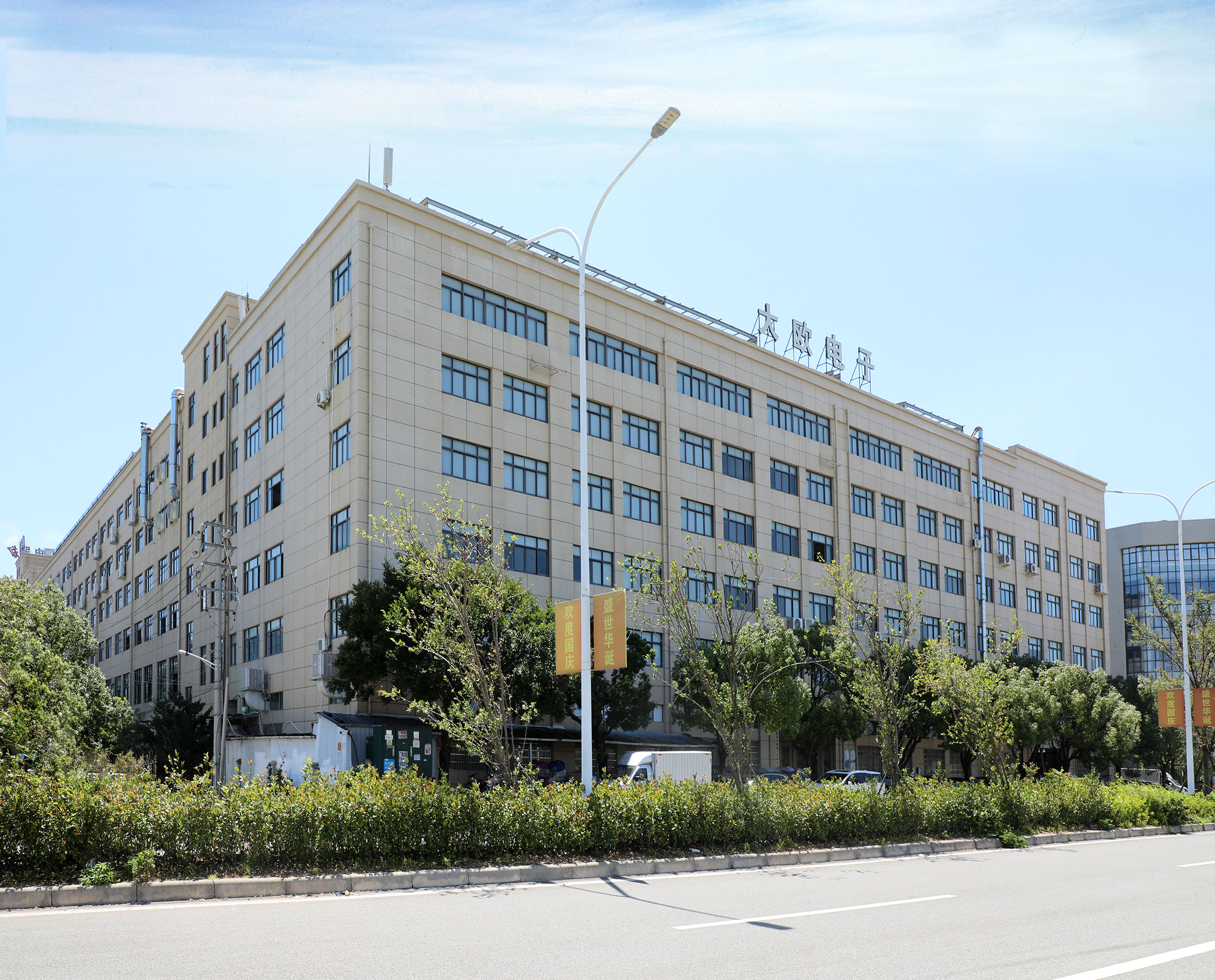
“Better” only becomes measurable once the criteria are fixed: grade-level material documentation, flame and fluid evidence for the exact grade, dimensional capability on the component, and a change-control process that survives cost-down pressure. Zhejiang Daou Electronics Co., Ltd is a manufacturer of automotive wire harnesses, battery terminals, fuse boxes and connectors, and states that it operates an IATF 16949 quality system with in-house development and production from mould making through finished-product inspection. Those statements are company-reported and should be verified against a valid certificate, a factory audit and sample test reports before a programme is awarded. The practical comparison is between documented capabilities measured on the same criteria, not between brand names.
Is DOCB24001 available in both PA66 and PA66 GF30?
The bracket is specified with two material options, unfilled PA66 and PA66 GF30, and both are evaluated against the same envelope of UL94 V-0 or V-2 flame rating, -40°C to +125°C operating range, and resistance to engine oil, coolant, cleaning agents and salt spray. Which option applies to a specific order is fixed by the drawing and purchase order, and the named grade — not just the family — should appear on both documents.
Should I specify UL94 V-0 or V-2 for the bracket?
V-0 is the stricter classification and is the safer default where the requirement is written around a vertical burn test without flaming drips. V-2 permits flaming drips that briefly ignite a cotton indicator and is normally chosen only where the purchaser's specification allows it. In both cases the classification must be evidenced for the exact grade, colour and wall thickness, because UL94 results do not transfer between them.
Is PA66 GF30 better than PA66 at +125°C?
It is better on stiffness retention and creep resistance, which is usually what a loaded bracket needs at +125°C. It is not better on elongation and notch sensitivity, which is what a snap-fit latch needs. The useful comparison is a creep curve and a latch strain calculation at temperature for both candidate grades; without those two pieces of evidence, better is an assumption rather than a finding.
Will either material resist engine oil, coolant, cleaning agents and salt spray?
Both are polyamide 66 based, so both face the same chemical family risks, and both depend on the specific grade and on temperature. Coolant contact at elevated temperature is the case that most often needs explicit evidence, because hot glycol environments are a recognised hydrolysis concern for polyamides. Salt spray mainly attacks metal inserts, clips and platings in the assembly. Request immersion or exposure data at the specified temperature and duration, plus a salt-spray result for the assembled part.
How do I obtain samples and documentation for both material options?
Ask for the same package for each option: named grade datasheet, UL yellow card or flame test report, fluid and salt-spray evidence at the specified conditions, a dimensional report on the bracket, and sample parts for vibration and assembly trials. Zhejiang Daou Electronics publishes its company and product overview in a downloadable brochure, which is a practical starting point before a technical RFQ.
Conclusion: the decision rule
Choose PA66 GF30 for the DOCB24001 bracket when the bracket carries sustained load at +125°C, when connector position tolerance is tight across the temperature range, or when the geometry can be redesigned around lower elongation. Choose unfilled PA66 when the critical features are snap-fits, latches and thin sections, when sustained load is low, and when tool life and process simplicity carry real weight in a small-lot programme. In both cases the flame rating and the fluid evidence are pass-or-fail gates, not tie-breakers.
What settles the decision is documentation rather than opinion: a named grade, a UL94 V-0 or V-2 classification tied to that grade and wall thickness, creep data at +125°C, and fluid and salt-spray results at the specified conditions. A bracket that meets those four requirements in either material is a correct specification. A bracket that meets them in only one material is not a comparison at all.
Next step: request the DOCB24001 sample set in both material options, together with grade datasheets and flame documentation, and run the latch strain and vibration checks before the drawing is released.
Have Questions or Need More Details?
Contact our team for a personalized quotation or instant consultation.
Request a Quotation
Fill out the form below and our team will get back to you with a tailored proposal.
WhatsApp Direct Chat
Prefer to chat in real-time? Message us on WhatsApp for instant assistance & quick answers.
- Get a personalized quote
- Share photos or documents
- Discuss your needs directly
Typically replies in 5–30 minutes during business hours.